Daikon vs Red Radish: Size, Bite and Kitchen Uses
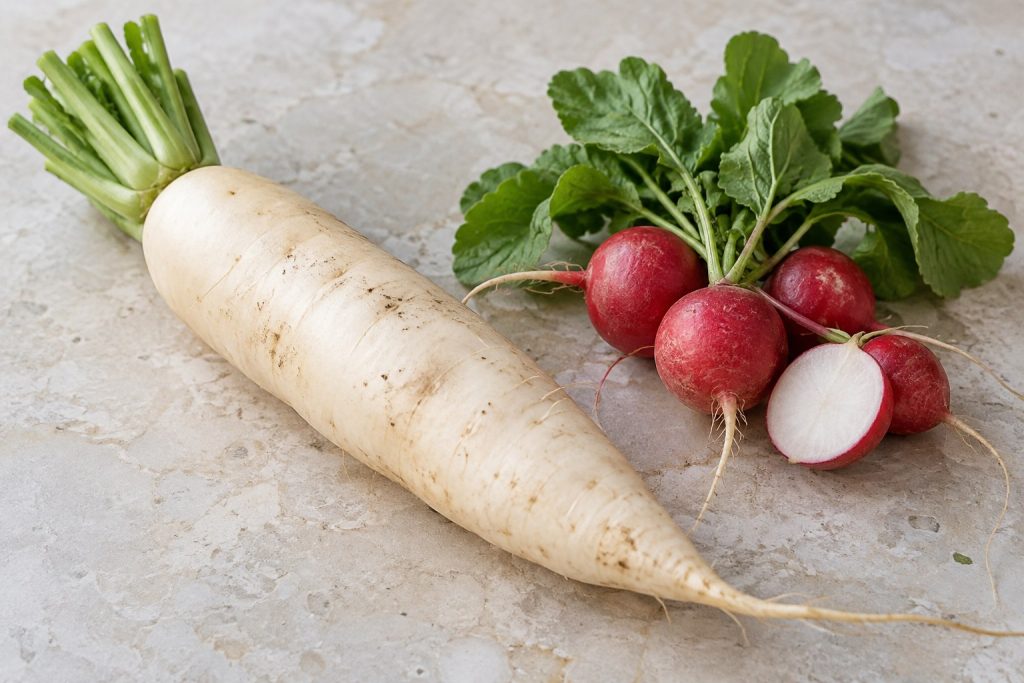
Daikon is a type of radish, commonly long and white, with a generally milder taste than familiar small red radishes. It can be eaten raw or cooked. Its large size does not make it a carrot or a turnip.
Expect variation in bite
University of Illinois Extension describes daikon as tending to be sweeter and milder than peppery red radishes. Treat that as a useful expectation, not a promise about every root. Taste a small prepared piece when the strength matters to a raw salad.
Clean before deciding to peel
Scrub the root with a clean vegetable brush. Illinois Extension notes that peeling daikon is optional, although a recipe or your texture preference may call for it. Remove damaged parts rather than assuming a white surface is already clean.
Choose the cut for the dish
Thin slices or shreds suit different dishes from thick pieces intended for cooking. A large daikon offers more room for uniform slices, while small red radishes make convenient rounds. Match the recipe’s cut before deciding whether a substitution works.
Compare portions after preparation
Replacing roots by count is misleading because their sizes differ greatly. Use the specified prepared amount. For tested pickling or preserving recipes, follow the named ingredients and permitted changes instead of assuming any radish can be exchanged without reviewing the method.
Sources
University of Illinois Extension.
Related reading
Turnip vs Rutabaga: How to Tell the Roots Apart
How to Wash Fruit and Vegetables Without Soap
Related reading
About this article: an introductory editorial draft. Not yet independently reviewed by a fitness professional.