Clementines vs Mandarins: One Is Part of the Other
Clementines are a type of mandarin, so the two names are not opposing fruit categories. Mandarin is the broader group, which also includes other types such as satsumas. A bag labeled mandarins may therefore contain clementines.
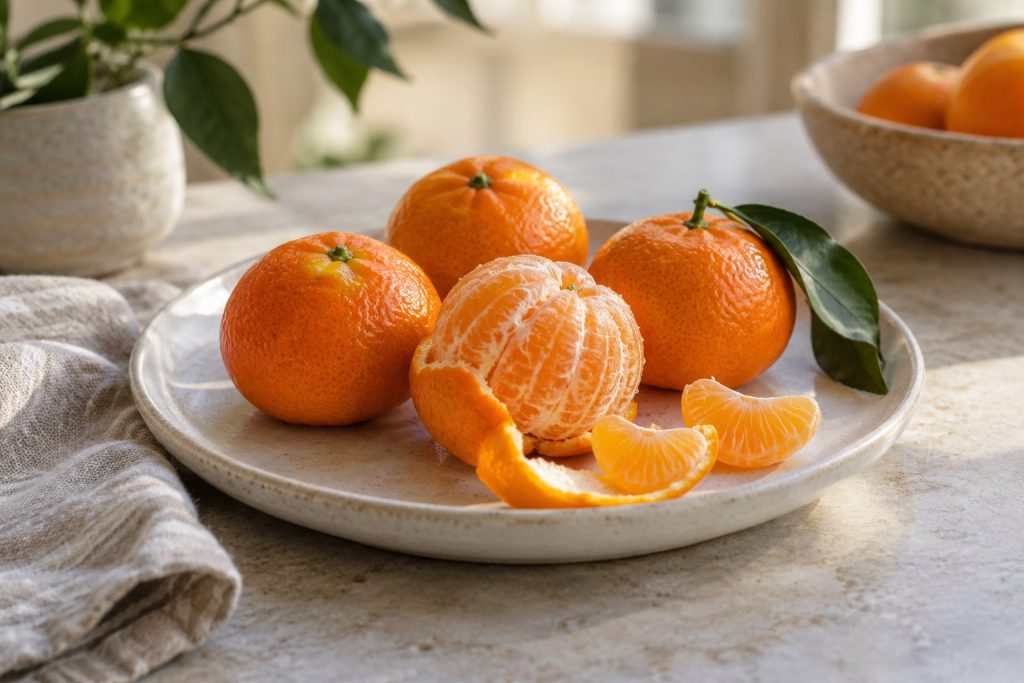
Look for the variety information
The University of California’s mandarin classification includes clementines among several groups. Read the pack’s variety or product description when you want to buy the same fruit again. A brand name alone may not tell you the variety inside.
Do not treat the name as a seed guarantee
Clementines can develop seeds when cross-pollinated. The name clementine by itself therefore does not guarantee every segment will be seedless. Check the actual fruit when seeds matter to the way you will serve it.
Choose the fruit in front of you
Size, peel condition, ripeness and your taste preference are more useful shopping clues than a claim that every clementine beats every other mandarin. A category name cannot promise identical sweetness or ease of peeling in every bag.
Compare the edible amount
For a fruit salad, measure peeled segments if the recipe specifies a prepared quantity. Whole-fruit counts can differ because fruit size and peel weight vary. Choosing a different mandarin type can change the flavor without changing the basic preparation task.
Sources
University of California IPM; University of California ANR.
Related reading
About this article: an introductory editorial draft. Not yet independently reviewed by a fitness professional.