Rim vs Disc Brakes: How to Identify What Is on Your Bike
A rim brake presses pads against the wheel rim. A disc brake presses pads against a separate rotor near the wheel hub. Look for that contact surface to identify the basic system on a stationary bicycle.
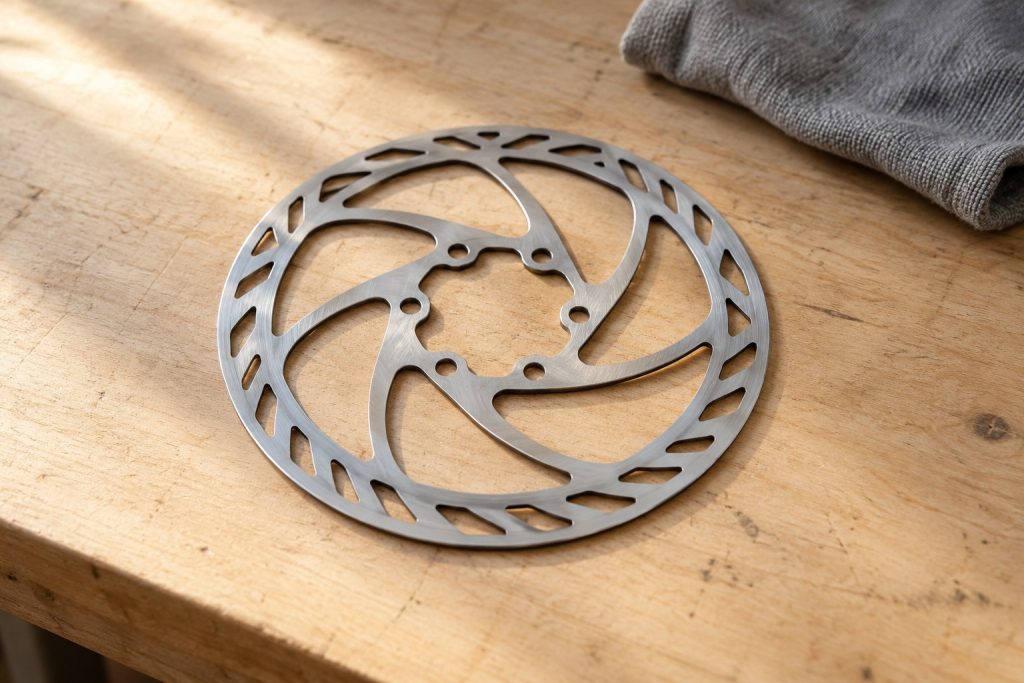
Look near the tire and the hub
Rim-brake pads sit beside the rim, close to the tire. A disc rotor is a smaller metal disc around the hub, passing through a caliper attached to the frame or fork. A photograph of the whole wheel can help you compare these locations.
Do not infer the mechanism from the rotor alone
A disc brake is not automatically hydraulic. Cable-operated disc brakes also exist. Record the brake model and consult its documentation if you need to distinguish the actuation system; rotor appearance alone is not enough.
Identify before ordering replacement parts
Photograph model markings on the brake and the bicycle’s specification label. Brake pads, rotors and wheels are not interchangeable simply because their listings mention disc or rim brakes. Give the exact information to a shop rather than ordering by appearance.
Keep identification separate from repair
Recognizing the system does not establish its condition or make a conversion compatible with the bike. If braking feels abnormal, arrange inspection before riding. Follow the bicycle and brake manufacturer’s maintenance instructions; this visual guide is not an adjustment or repair procedure.
Sources
Trek; Trek — Verve 1 Disc specifications.
Related reading
About this article: an introductory editorial draft. Not yet independently reviewed by a fitness professional.