Latex vs Latex-Free Resistance Bands: What to Compare
Latex-free describes a resistance band’s material, not its difficulty. To replace a latex band, check the stated material and compare resistance at the same stretch using the manufacturer’s chart. Color alone is not a universal strength scale.
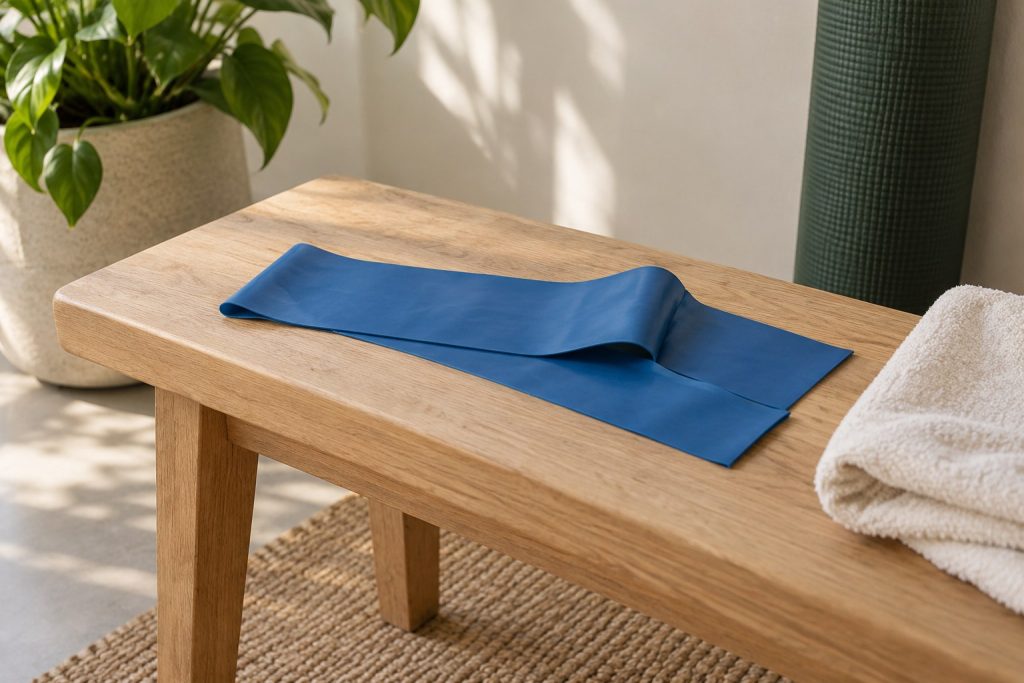
Check the exact material statement
Performance Health identifies its THERABAND professional latex-free bands as thermoplastic elastomer. That describes this product, not every latex-free band. If avoiding latex matters for you, look for an explicit product statement; a fabric surface or a familiar color does not establish what is inside.
Compare force at the same stretch
A longer stretch changes a band’s resistance. Compare force at the same percentage elongation, not merely the same distance between your hands. Band length, starting slack and how you hold it affect the comparison during an exercise.
A matched range is a brand-specific feature
THERABAND states that its professional latex-free range matches the pull forces and color progression of its latex range. Do not extend that claim to unrelated products. Use the chart for the exact range you are buying, especially when changing brand or band shape.
Material does not remove the need for inspection
Follow the supplied instructions for setup, storage and protection. The manufacturer advises checking for small tears, abrasion and cracks, including connection points, and replacing a worn band. Neither the latex nor latex-free label guarantees that a damaged band remains usable.
Sources
Performance Health / THERABAND.
Related reading
About this article: an introductory editorial draft. Not yet independently reviewed by a fitness professional.