Indoor or Outdoor Basketball: Choose the Cover for Your Court
For a basketball used on asphalt, choose a model explicitly rated for outdoor or indoor/outdoor play. The cover material helps narrow the choice, but the manufacturer’s court rating is more useful than price alone.
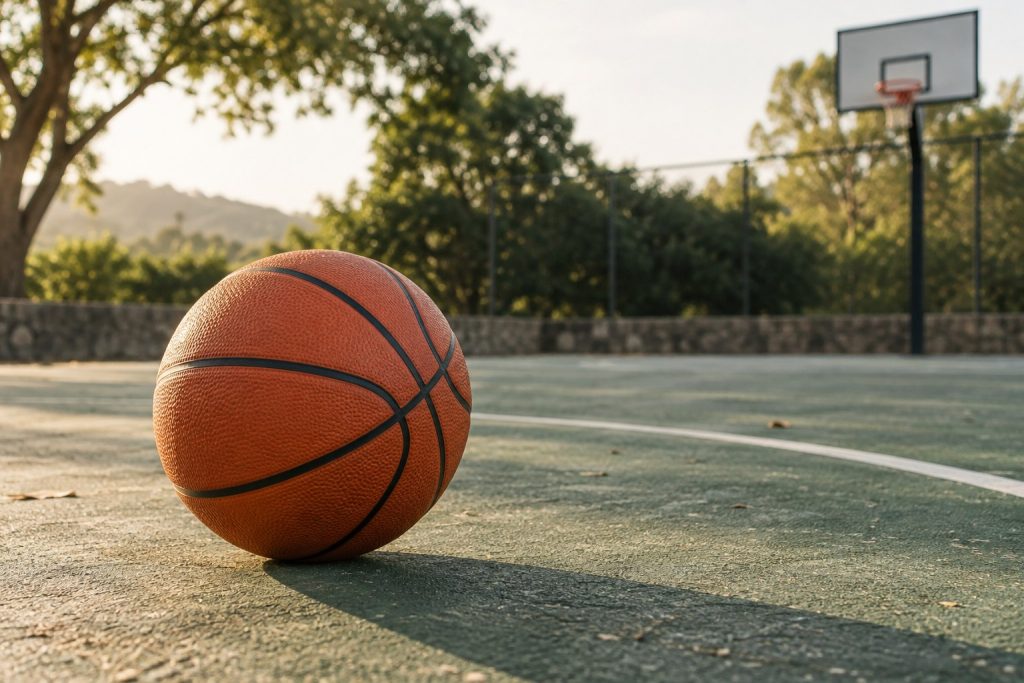
Rubber is a practical outdoor starting point
Wilson describes rubber covers as a durable option for rough outdoor surfaces. A rubber ball can make sense for casual blacktop sessions, especially when most of your play is outside. It need not feel identical to a ball used on a polished indoor court.
Composite does not name one universal cover
Composite balls include indoor models and indoor/outdoor models. Check the exact product rather than treating every synthetic cover as equally suitable for pavement. If you move between a gym and a park, an explicit indoor/outdoor rating is useful.
Premium leather is not automatically the better purchase
A genuine leather indoor ball may be intended for a very different surface from your local outdoor court. Paying more does not change that intended use. Choose for the court you actually use, then compare grip and feel within suitable models.
Check size and inflation separately
Cover choice does not determine the correct ball size for your age group, league or preference. Check those requirements separately. Inflate according to the particular ball’s instructions rather than using a pressure number borrowed from another model, and follow its cleaning and storage guidance.
Sources
Related reading
Basketball Sizes: The Number Describes More Than a Bigger Ball
About this article: an introductory editorial draft. Not yet independently reviewed by a fitness professional.