Quick Release vs Thru-Axle: Identify Your Wheel Attachment
A traditional quick-release skewer clamps a wheel into open dropouts; a thru-axle passes through the frame or fork and hub before securing into the opposite side. The attachment systems need compatible parts and different handling.
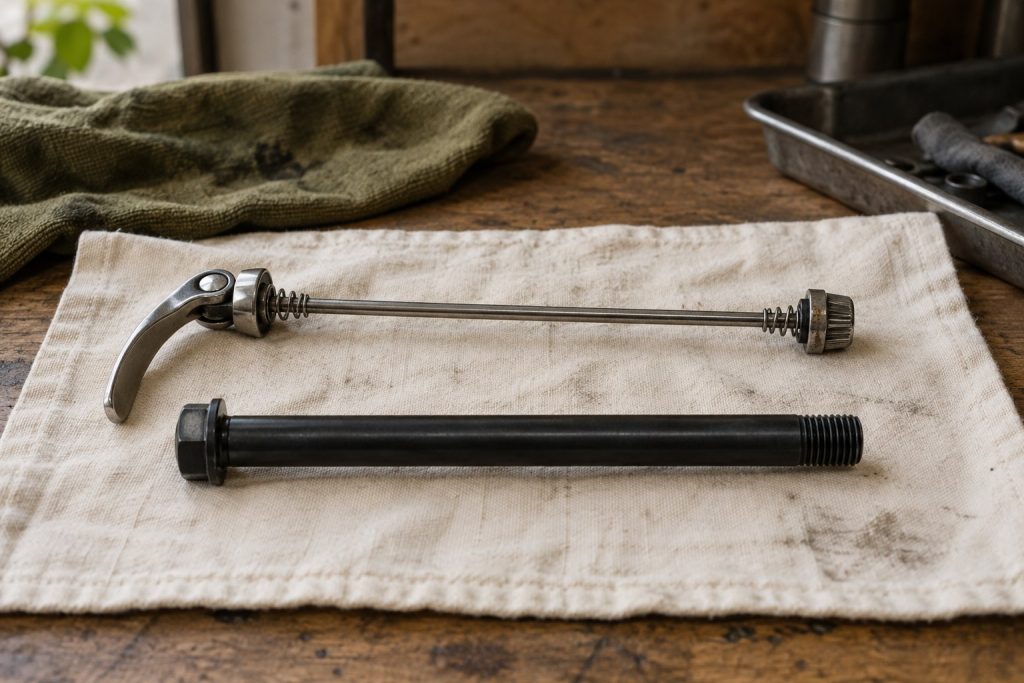
A lever is only a clue
Some thru-axles have levers and others use tools. A visible handle therefore does not prove that the wheel uses a traditional quick release. Check the bicycle’s manual and the actual mounting system before loosening anything.
Match more than the diameter
A replacement thru-axle must match the required length, thread, and other specifications. Trek warns against transferring an axle between bicycles without confirming compatibility. Similar appearance does not establish that it will secure the wheel correctly.
Learn the exact installation method
Park Tool separates quick-release and thru-axle installation procedures. Follow the manufacturer’s instructions for your bicycle and axle, including specified tightening requirements. Do not treat a quick-release lever as an ordinary wing nut.
Get uncertain attachment checked
If you cannot confirm that a wheel is securely installed, have a bicycle shop demonstrate the procedure before riding. This identification guide is not a complete installation tutorial, and neither system removes the need for correct assembly.
Sources
Park Tool — Wheel attachment systems; Trek — Bicycle owner’s manual, March 2026.
Related reading
Bike Tube Patch vs Tire Boot: Two Different Repairs
Will This Quick Link Fit Your Bicycle Chain?
Related reading
About this article: an introductory editorial draft. Not yet independently reviewed by a fitness professional.