White vs Red Miso: Choose by Flavor, Then Check the Label
White miso often has a lighter, milder flavor, while red miso commonly brings a deeper aroma. Treat those names as useful starting points, not fixed recipes or a reliable guide to sodium content.
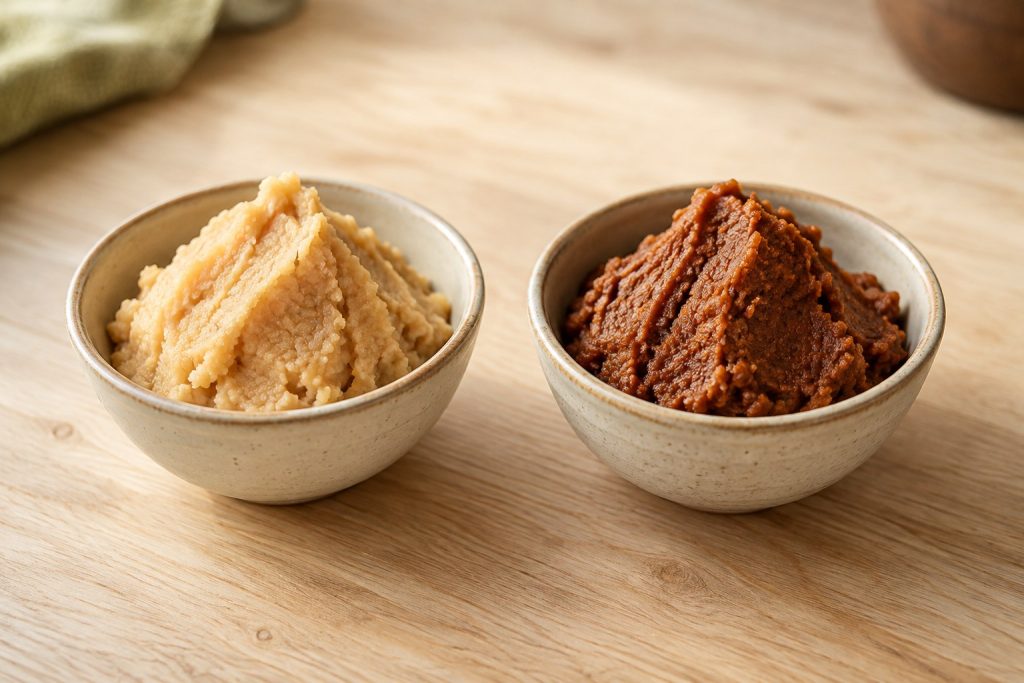
Compare an actual pair
Hikari describes its organic white miso as light with subtle sweetness, and its organic red miso as having abundant umami and a mature aroma. Those descriptions help explain one range; other makers and regional styles can differ.
Color does not reveal every ingredient
Both of those Hikari products list soybeans, rice, salt, water, yeast, and koji culture. Other miso can use different grains or added seasonings. Read the complete ingredient and allergen information rather than identifying a product from its color alone.
Adjust a swap by tasting
If a flexible soup or dressing recipe allows either style, mix a little miso into some liquid first and taste before adding more. A stronger flavor may change the dish even when the spoonful is the same size.
Compare sodium on the same basis
Use equal serving weights when checking nutrition labels. White does not automatically mean low sodium, and red does not establish an exact fermentation time. Follow the recipe and the jar’s storage directions instead of treating color as a complete specification.
Sources
Hikari Miso — Organic White; Hikari Miso — Organic Red; Hikari Miso — Flavor wheel.
Related reading
About this article: an introductory editorial draft. Not yet independently reviewed by a fitness professional.