Bike Cassette vs Threaded Freewheel: Identify Before Buying
A cassette fits onto a freehub body; a threaded freewheel screws onto a hub and includes its own ratchet mechanism. Both can look like a stack of rear sprockets, but they are not interchangeable replacements.
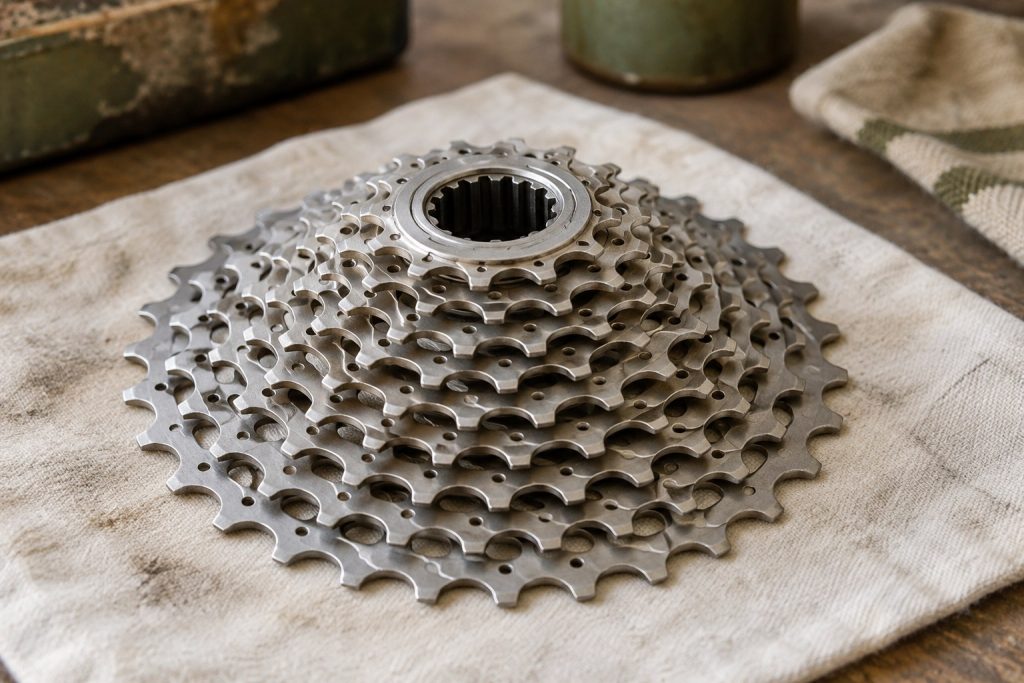
Where the mechanism lives
With a cassette system, the freewheeling mechanism stays in the hub assembly when the cassette is removed. With a traditional threaded freewheel, the mechanism is part of the sprocket unit. That is the central distinction, not the number of gears.
Use the central fitting as a clue
Park Tool describes checking the tool fitting while turning the sprockets backward on a removed rear wheel. A cassette fitting turns with the sprockets; a threaded-freewheel removal fitting stays still. Consult its illustrated guide if the parts are unfamiliar.
Count more than sprockets
For a replacement, record the existing model and mounting system as well as the number of sprockets and tooth range. Cassette mounting standards also vary. Identifying a cassette is only the first compatibility check, not confirmation that any cassette will fit.
Choose tools only after identification
Similar-looking splined removal tools can differ in size. Do not force one into a fitting or start loosening parts to find out. A bicycle shop can identify the system from the wheel and component markings before you buy parts.
Sources
Park Tool — Cassette and freewheel identification.
Related reading
About this article: an introductory editorial draft. Not yet independently reviewed by a fitness professional.