How Ripe Should Bananas Be for Banana Bread?
For most banana bread recipes, choose soft, well-ripened bananas with plenty of brown spotting rather than firm green fruit. Ripeness affects banana flavor, sweetness and how easily the fruit mashes. Dark skin alone is not a complete quality check.
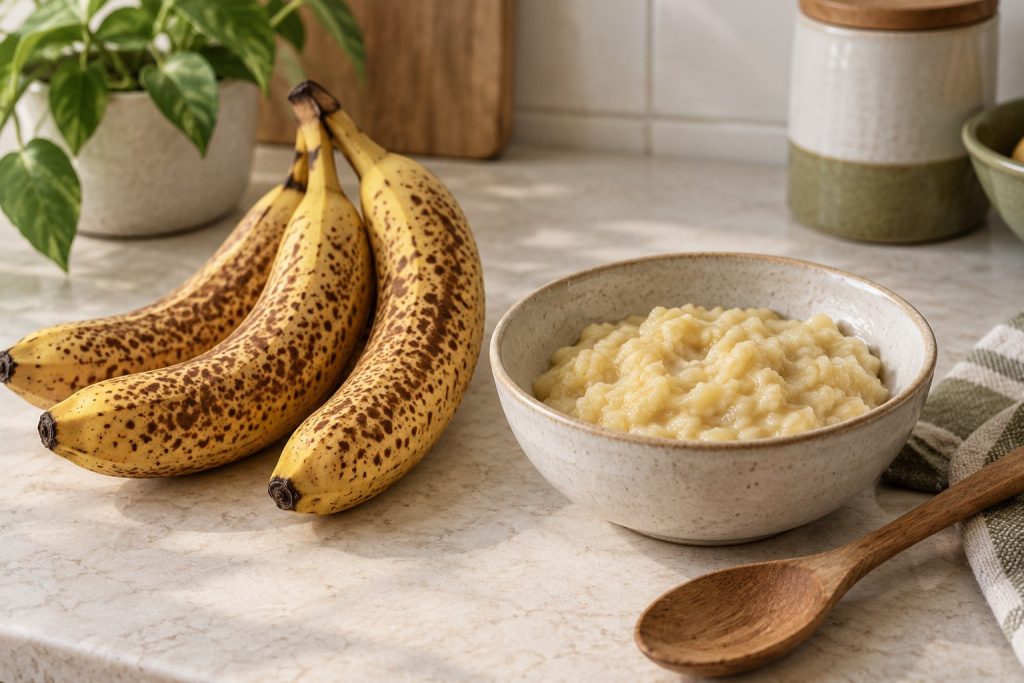
Read the fruit as well as the peel
King Arthur’s baking guide favors very ripe bananas for a stronger banana flavor. It distinguishes ripeness from fruit beginning to rot. Do not treat a recipe’s request for overripe bananas as permission to use moldy or spoiled fruit.
Measure the peeled banana
Bananas vary in size. If the recipe supplies a weight or mashed volume, measure that amount after removing the peel. An extra-large banana can add more fruit and moisture than the author intended even when the count of bananas matches.
Do not confuse softening with ripening
Heating an unripe banana may soften it or darken its peel without producing the flavor of naturally ripe fruit. King Arthur’s reported roasting trial found that distinction. Use the recipe’s intended fruit rather than assuming color alone confirms readiness.
Plan for later batches
Freezing already ripe bananas can preserve a baking supply. Follow your recipe’s thawing and liquid instructions; thawed fruit can be watery. Label the amount you froze so you can match a future recipe without guessing from a frozen lump.
Sources
King Arthur Baking — Ripe Bananas.
Related reading
Fresh vs Frozen Berries: Buying, Texture, and Storage
How to Measure Flour Without Packing Too Much into the Cup
Related reading
Plantains vs Dessert Bananas: Choose for the Dish
Related reading
About this article: an introductory editorial draft. Not yet independently reviewed by a fitness professional.