Bicycle Tire TPI: A Fabric Count, Not a Puncture-Proof Rating
TPI means threads per inch; EPI means ends per inch. These figures describe the density of a bicycle tire’s casing fabric. They are not tire pressure, tread depth or a guarantee that the tire cannot puncture.
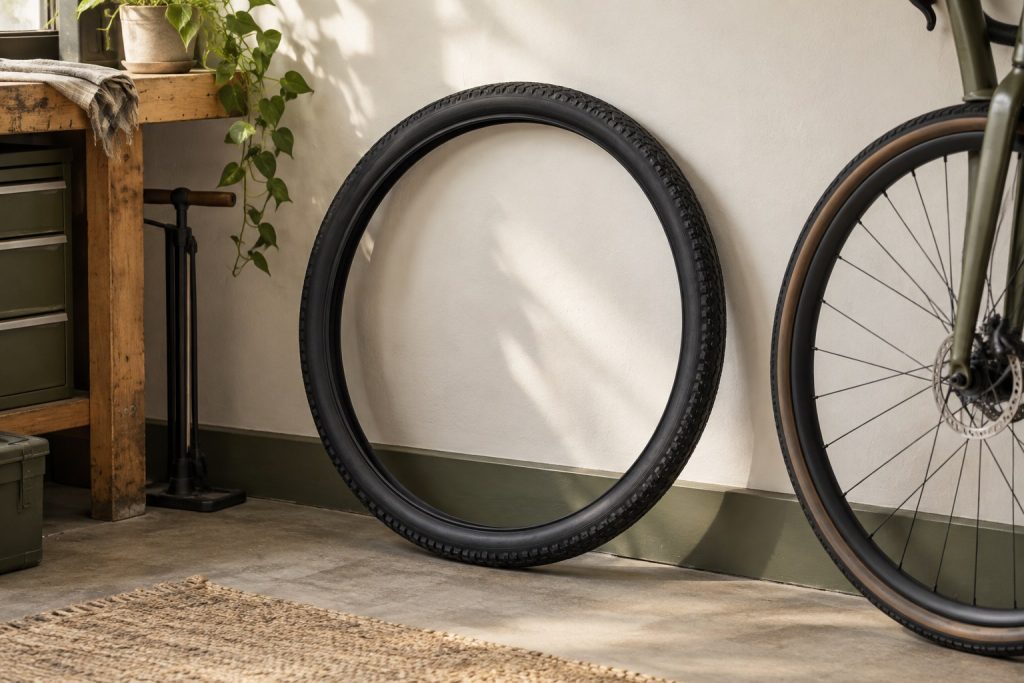
Locate the casing in the construction
Schwalbe distinguishes the casing, bead and rubber tread. A casing number describes one part of that structure. Read the tire’s size and intended use separately; neither follows automatically from a high thread count.
Ask how layers were counted
Schwalbe warns that some reported numbers add threads across several layers, while it reports density for one layer. Two large numbers may therefore use different conventions. Look for a definition from each manufacturer before comparing specifications.
Do not assume more always means tougher
Finer, denser fabric can have different trade-offs from coarser fabric. Schwalbe notes that its very fine competition casings can be more vulnerable to damage. Protective layers, rubber and intended use still matter; TPI alone cannot rank every tire’s durability.
Choose for the actual ride
Compare compatible tires for your surface, bicycle and priorities, using the maker’s complete specification. Keep pressure guidance separate from casing density. If a seller lists only TPI, ask for the missing construction and fit information before deciding.
Sources
Related reading
About this article: an introductory editorial draft. Not yet independently reviewed by a fitness professional.