ANT+ or Bluetooth for a Heart Rate Strap? Check the Receiving Device
ANT+ and Bluetooth Low Energy are ways to transmit sensor data. They are not different methods of measuring your pulse. For a chest strap, the useful question is whether the receiving watch, phone, app or gym machine supports the connection you want.
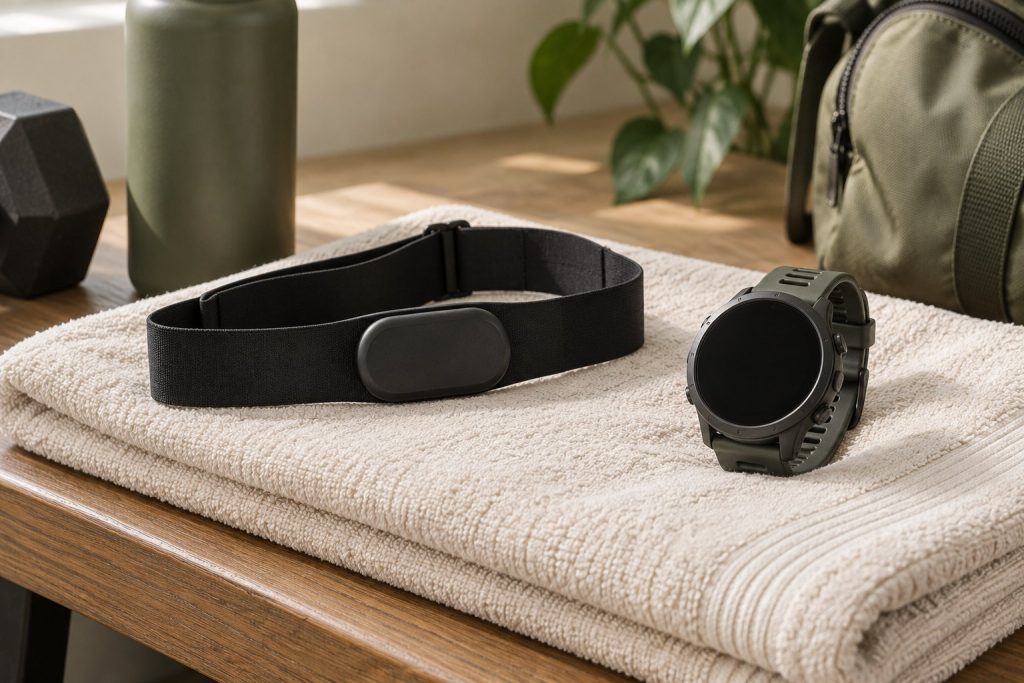
Check both ends of the connection
Read the sensor specification and the receiver’s list of supported accessories. A phone having Bluetooth does not guarantee that every app can read your strap. Pair through the app or device menu specified in its instructions, rather than assuming the phone settings are sufficient.
Count simultaneous receivers
Garmin describes ANT+ sensors broadcasting to multiple compatible devices. Bluetooth connection limits depend on the sensor. For example, Polar’s H10 guide supports 2 simultaneous Bluetooth devices when the relevant setting is enabled. Do not apply that limit to every strap.
Troubleshoot one connection first
If a strap is not found, check its battery, wake-up instructions and whether another app already occupies an available connection. Confirm the sensor identity before pairing in a busy gym. Follow the manufacturer’s troubleshooting sequence before buying replacement equipment.
Separate connection from recording
A live pulse number on a machine does not prove that the session is being saved to your preferred account. Check where the workout is recorded and whether any extra metrics require a particular device. The wireless label alone does not guarantee those features.
Sources
Garmin — Sensor Connections; Polar — H10 Guide.
Related reading
Chest Strap vs Wrist Heart Rate Monitor: Fit, Signal, and Convenience
About this article: an introductory editorial draft. Not yet independently reviewed by a fitness professional.