Trekking Pole Lever Locks vs Twist Locks: Identify Before Adjusting
A lever lock clamps the pole from outside; an internal twist lock secures the sections using an expanding mechanism inside the tube. Identify the actual system before adjusting it. The folding joint and the length-adjustment lock may be separate parts.
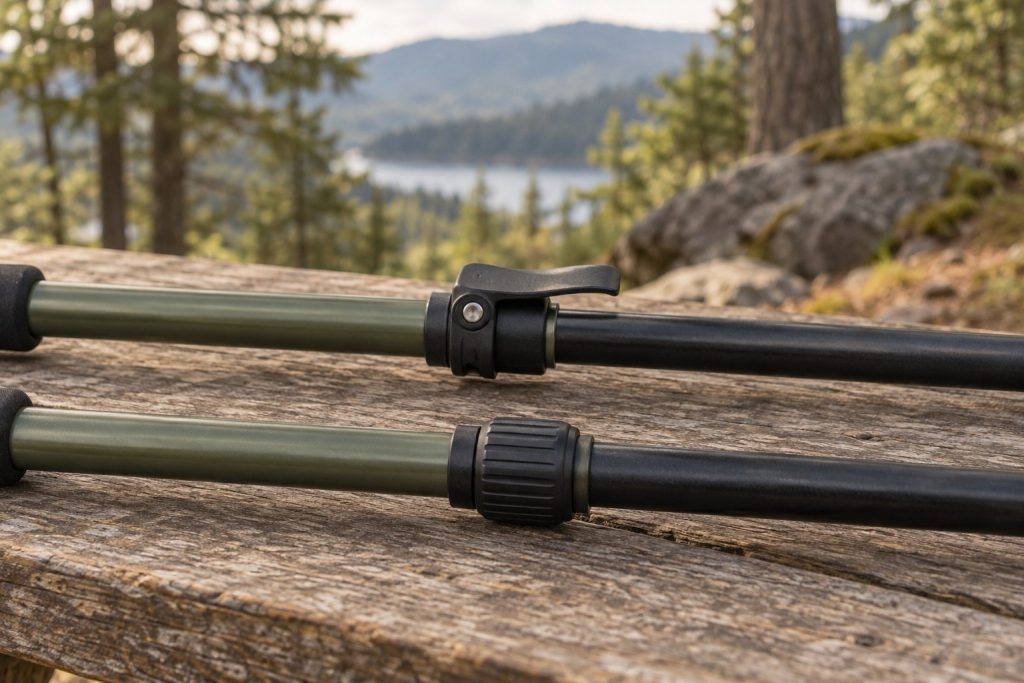
Recognize the mechanism
LEKI distinguishes its external Speed Lock from the internal Super Lock System. A visible hinged lever suggests the former; twisting the sections operates the latter. Product names and details vary, so check the exact model rather than relying on color.
Separate length from clamping tension
For the cited Speed Lock system, opening the lever allows length adjustment. A separate screw or wheel changes the clamping tension. Follow the model’s procedure with the lever open; forcing a lever closed is not the same as setting the correct length.
Check the result before walking
Stay within the pole’s marked adjustment range and check that the sections hold as directed by the manufacturer. A pole that slides after locking needs attention before use. Stop and inspect it on stable ground rather than adjusting while moving.
Use matching parts and instructions
Clamp parts must match the pole system and tube size. Do not assume a spare lever from another pole will fit, or oil a slipping lock without manufacturer guidance. If adjustment does not restore secure holding, contact the maker or an appropriate service shop.
Sources
LEKI — Speed Locks; LEKI — Pole Maintenance.
Related reading
Folding vs Telescoping Trekking Poles: Compare Packed and Working Length
Trekking Poles for Beginners: Fit, Locks, and First Practice
About this article: an introductory editorial draft. Not yet independently reviewed by a fitness professional.