Vanilla Bean Paste vs Extract: Which Does a Recipe Need?
Vanilla bean paste is typically thicker than extract and contains visible vanilla seeds. Extract is a pourable liquid. Either can provide vanilla flavor, but the recipe and the particular product determine a suitable substitution.
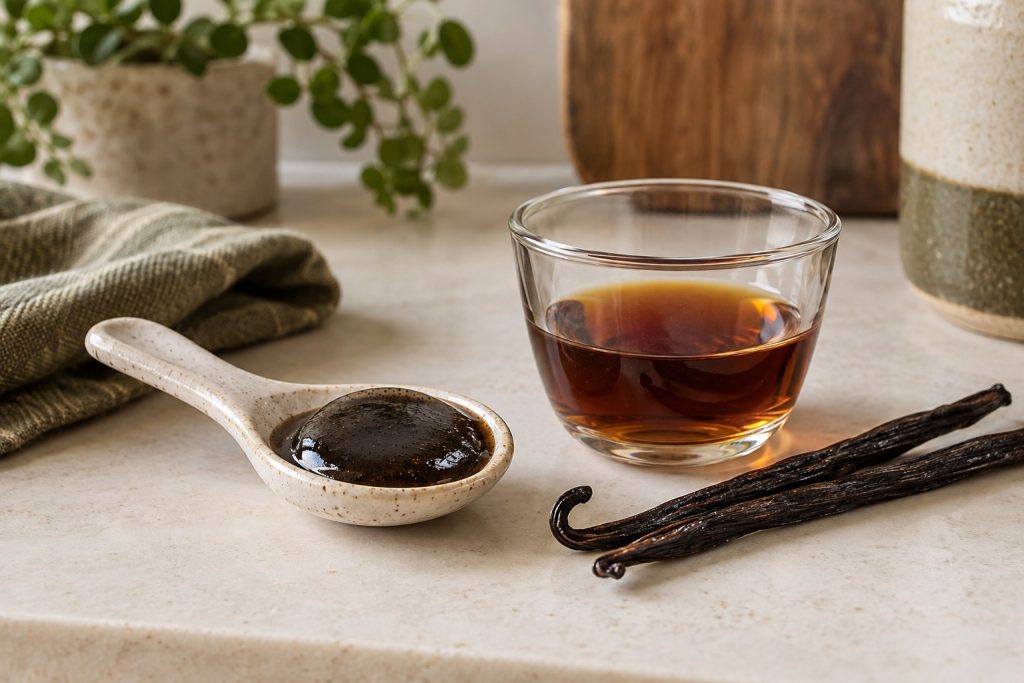
Paste is more than ground beans
For example, Nielsen-Massey’s paste contains sugar, water, vanilla extract, seeds and a thickener. Other formulations differ. Read the ingredient list rather than assuming a jar of paste contains only the inside of vanilla pods.
Use a conversion the maker supports
Nielsen-Massey recommends equal volumes when replacing its vanilla extract with its paste. That supports a substitution for those products, not a universal rule for every concentrated extract, flavoring or paste sold under similar names.
Decide whether visible specks matter
Paste can be useful when you want vanilla flecks in a pale cream or dessert. Extract is a straightforward option when you do not want visible seeds. Specks alone do not measure flavor strength or overall quality.
Keep the rest of the recipe stable
Measure the vanilla as directed and change only that ingredient when testing a substitution. Do not remove a large amount of recipe liquid or sugar just because the paste is thick. Follow a tested recipe for larger changes.
Sources
Nielsen-Massey; Nielsen-Massey.
Related reading
About this article: an introductory editorial draft. Not yet independently reviewed by a fitness professional.