Exercise Bike Flywheel Weight: Why Heavier Is Not a Complete Rating
A heavier flywheel is not, by itself, proof of a better exercise bike. The wheel’s size, distribution of mass and speed also affect its rotational behavior. Compare the complete bike rather than ranking models by one weight figure.
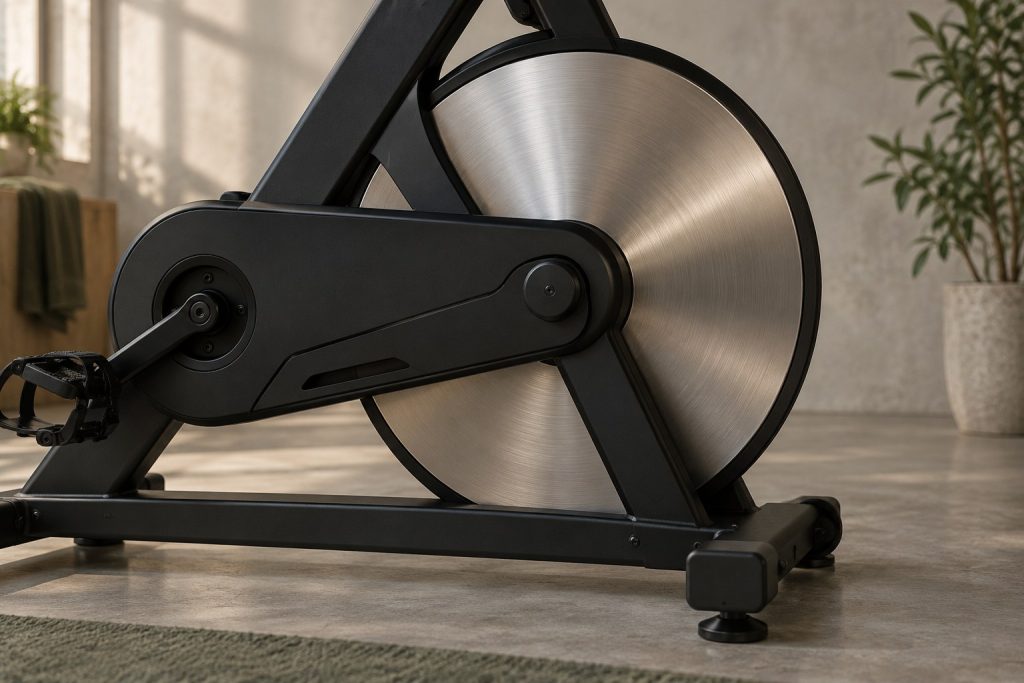
Separate mass from rotational behavior
OpenStax explains that rotational inertia depends on where mass sits relative to the axis, and rotational energy also depends on speed. Applying that principle to bikes, equal flywheel masses need not produce an identical feel through different drivetrains.
Keep resistance separate
Flywheel weight is not the resistance setting and does not state the power you produce. Keiser describes a lighter flywheel in its M Series design; that is an example of a different design approach, not proof that all light wheels outperform heavy ones.
Try a controlled change of pace
During an allowed demonstration, notice how starting, steady pedaling and slowing down feel at manageable settings. Ask staff how to stop the specific bike before riding. Do not assume its pedals can coast independently of the flywheel.
Include practical ownership checks
Check saddle and handlebar adjustment, stability, service instructions and total machine weight. Flywheel mass and total bike mass are separate entries. If shopping online, use the model’s manual and return terms to resolve uncertainties that a photograph cannot answer.
Sources
Related reading
Exercise Bike Watts vs Resistance: What Are You Actually Comparing?
About this article: an introductory editorial draft. Not yet independently reviewed by a fitness professional.