Green vs Black Olives: Does Color Always Mean Ripeness?
Black olives are not always simply green olives left longer on the tree. Processing can also change their color. The California Olive Committee explains that its California ripe olives are harvested green and can darken through oxidation during processing.
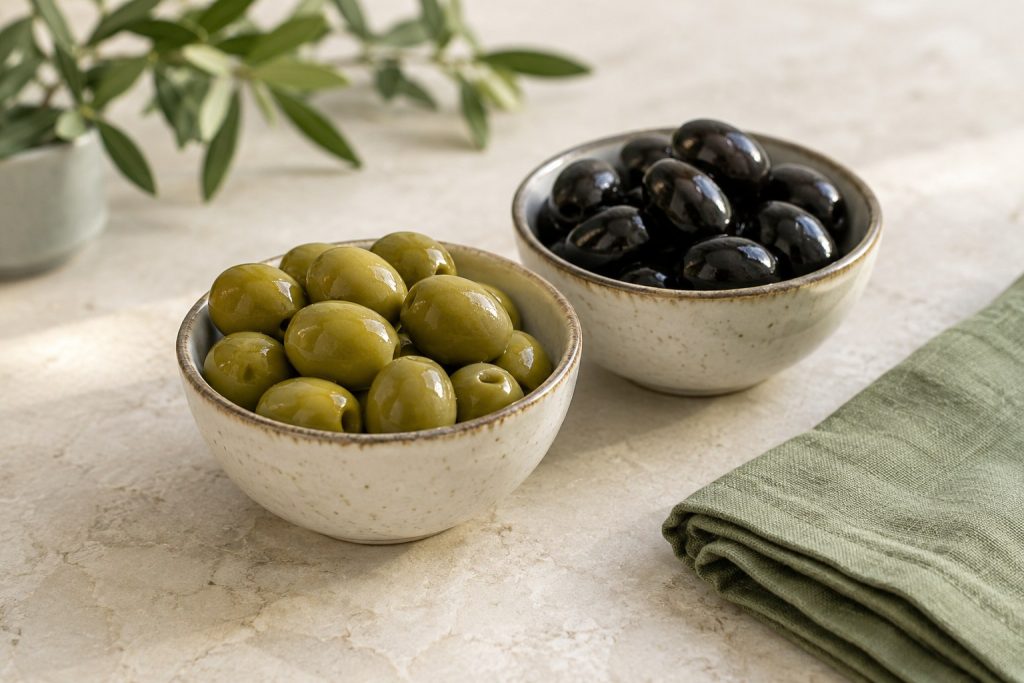
Keep the example in context
This describes California ripe olive production, not every olive sold worldwide. Do not apply the same story automatically to every variety or curing method. Look for the product’s name and preparation description when you want to understand the specific olives in front of you.
Read more than the color
Variety, curing style, packing liquid and added seasonings help distinguish products. Green and black are useful visual descriptions, but they are incomplete shopping instructions. If a recipe names a particular olive, start with that style for the closest intended flavor.
Check pits and usable quantity
Whole, pitted and sliced olives require different preparation. Confirm whether pits are present before serving or cooking. For a recipe quantity, check whether the weight includes packing liquid and whether the author means drained olives rather than the entire jar contents.
Compare the actual label
For a nutrition comparison, use equivalent portions and read the sodium information on each package. Color alone is not a reliable health ranking. Choose by the recipe and your preferences while keeping ingredient, preparation and serving-size differences visible.
Sources
Related reading
Drained Weight vs Net Weight: How Much Food Is in the Can?
Low Sodium vs Reduced Sodium: Reading US Food Labels
Related reading
Capers vs Caperberries: A Bud and a Fruit from the Same Plant
About this article: an introductory editorial draft. Not yet independently reviewed by a fitness professional.