Why Has My Canned Coconut Milk Separated?
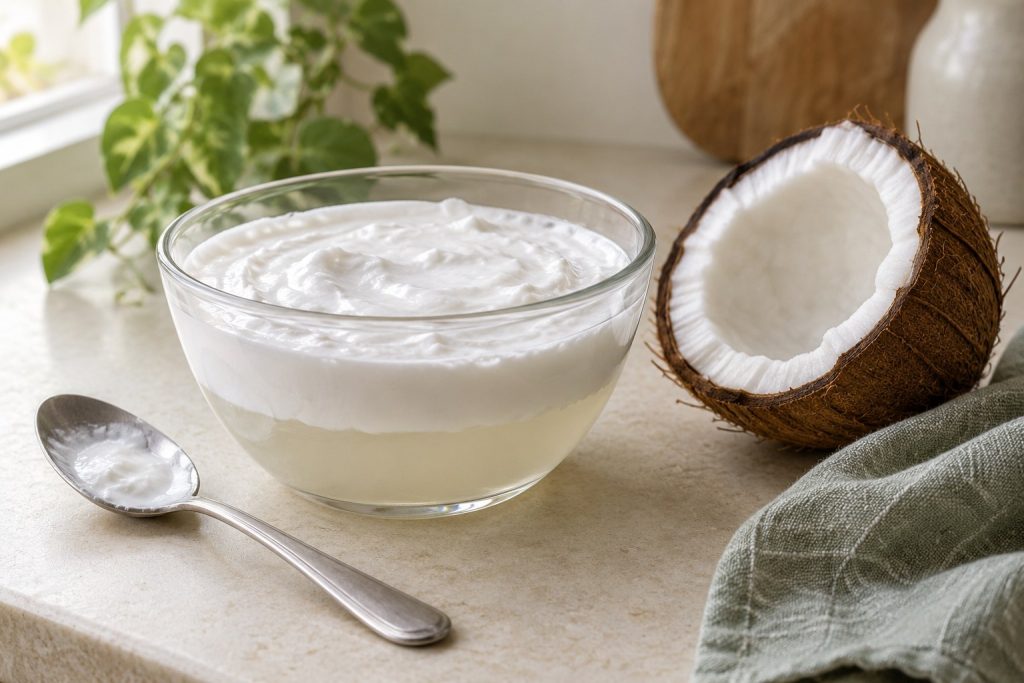
Coconut milk can separate into a thicker creamy layer and thinner liquid, particularly when cool. AYAM describes this behavior in its products. Separation alone is a texture observation; it does not establish whether a particular container is safe or spoiled.
Check the product’s instructions
Some products use stabilizers and others separate more visibly. Read the actual label instead of expecting every brand to behave identically. AYAM suggests shaking its coconut milk before opening when the aim is to use a mixed product.
Mix when the recipe needs the whole milk
If already opened, transfer the contents to a suitable bowl or pan and stir according to the recipe. Gentle warming can help a firm layer combine with the liquid. Do not heat a sealed can, and follow the product’s handling guidance.
Keep layers separate when requested
Some recipes intentionally use the thick portion. AYAM’s coconut-cream dessert example chills the product and scoops that layer without shaking. Read the method before mixing everything together; the whole can and only its creamy layer are different recipe portions.
Keep storage and safety questions separate
Follow the package’s storage and after-opening directions. Expected separation is not a reason to ignore damaged packaging or other signs that concern you. This explanation describes a common physical change, not a home test that certifies a food as safe.
Sources
Related reading
Coconut Milk vs Coconut Beverage: Which One Does the Recipe Mean?
Coconut Cream vs Cream of Coconut: Check for Added Sugar
Related reading
Coconut Water vs Canned Coconut Milk: Drink or Cooking Base?
About this article: an introductory editorial draft. Not yet independently reviewed by a fitness professional.