Bumper Plates vs Iron Plates: More Than a Rubber Surface
Bumper plates and iron plates both add weight to a bar, but their construction and intended use differ. A rubber exterior alone does not prove that a plate is a bumper. Compare the actual specifications and the way your gym allows the equipment to be used.
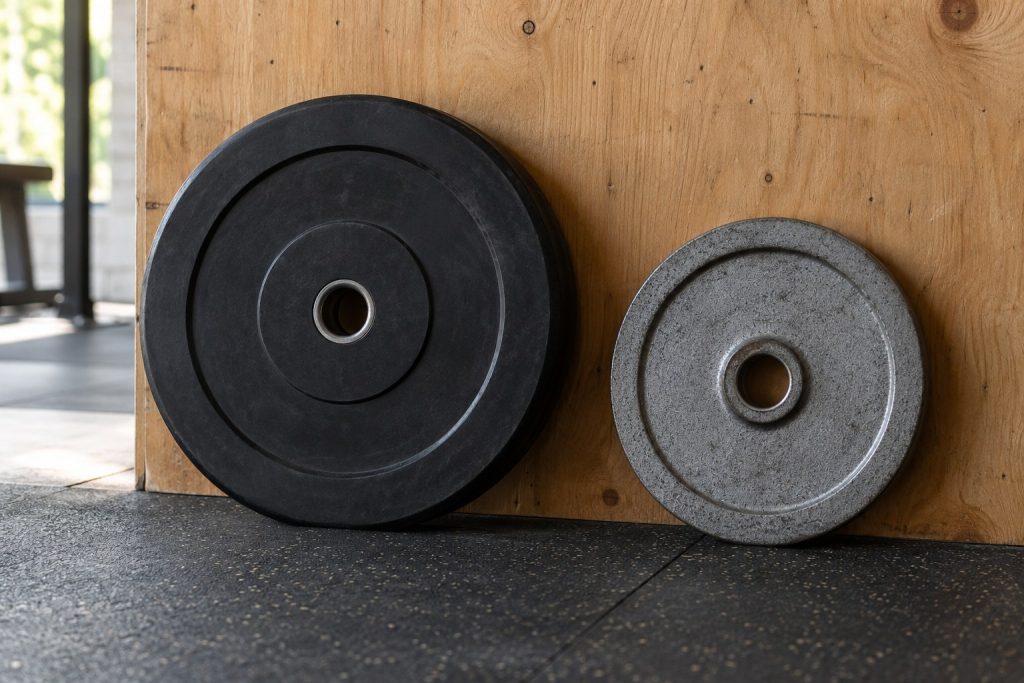
Identify the construction
Rogue separates rubber or urethane bumpers, metal plates and rubber-coated plates in its range. Metal plates are generally more compact for a given load. A coated iron plate and a purpose-built bumper should not be treated as the same product.
Read dropping restrictions
Even within a bumper range, restrictions can differ. Rogue states that its lightest urethane plates should not be used alone for repeated bar drops. Follow the exact product instructions, the gym’s rules and the requirements of the bar and platform.
Check space and compatibility
Confirm the center-hole size against the bar sleeve and check plate thickness against usable sleeve length. Include room for the required collars. A set may have enough total weight while still being impractical for the bar you own.
Choose for your session
For controlled lifts, compare handling, storage and suitable load increments. For weightlifting drills involving drops, get instruction and a properly approved setup. Bumpers do not guarantee a damage-free floor, quiet neighbors or safe technique.
Sources
Related reading
About this article: an introductory editorial draft. Not yet independently reviewed by a fitness professional.