Squash Ball Dots: Why Beginners May Need More Bounce
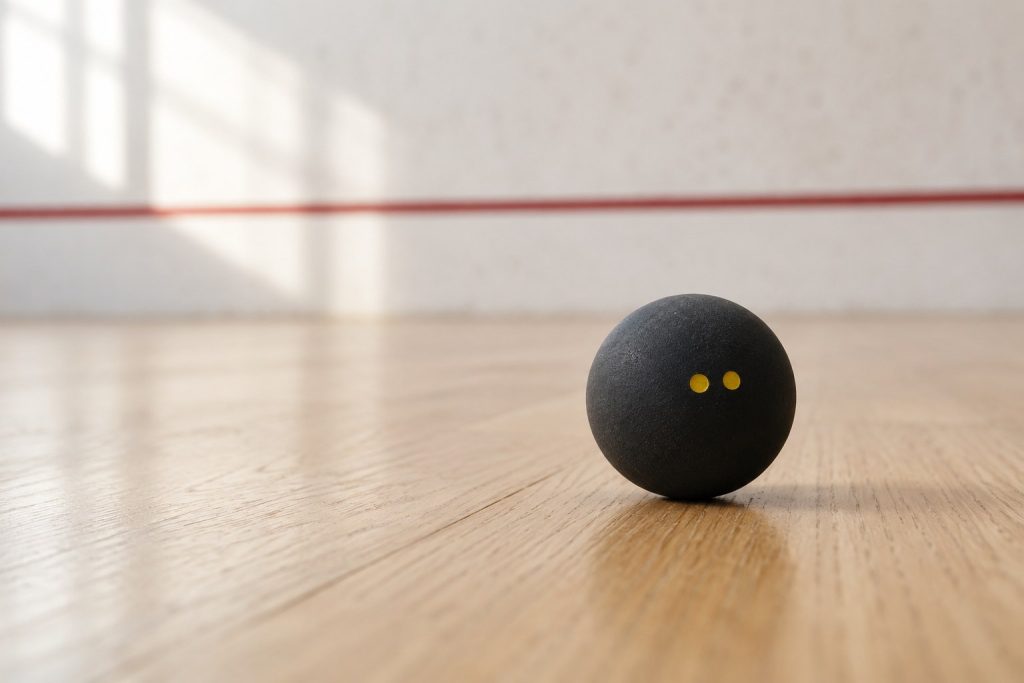
Squash-ball markings help distinguish balls with different playing characteristics. A low-bounce competition ball is not automatically the best starting choice. Ask the coach or club for a beginner-appropriate ball that gives you time to reach it and sustain a rally.
Start with the rally
England Squash explains that larger, bouncier beginner balls provide more time to develop technique. Its equipment guide places Game Blue at the beginner end and Pro at the demanding, low-bounce end. These are product choices, not a ranking of the player’s worth.
Read more than the dots
The same guide describes a single-yellow-dot Club ball as bouncier than Pro. Read the complete product name and intended level rather than buying from a color photograph alone. Ask the venue to identify an unfamiliar ball.
Allow for warm-up
England Squash notes that advanced balls take more time to warm up and that Pro performs best warmed up. A brief test with a cold ball may not show how it will behave in play. Ask the coach how to prepare the ball for the session.
Check the version of the sport
Squash 57 uses different balls from conventional squash. Confirm which game you booked before shopping. Inspect the ball for damage, and ask the club about suitable court shoes and protective eyewear as part of preparing for your first visit.
Sources
Related reading
About this article: an introductory editorial draft. Not yet independently reviewed by a fitness professional.