What Does Non-Marking Mean on Indoor Court Shoes?
Non-marking shoes are designed to avoid leaving outsole marks on suitable indoor floors. The label concerns the floor, not a guarantee that the shoe suits every sport or prevents slipping. Check the venue’s footwear rules and the shoe’s intended activity.
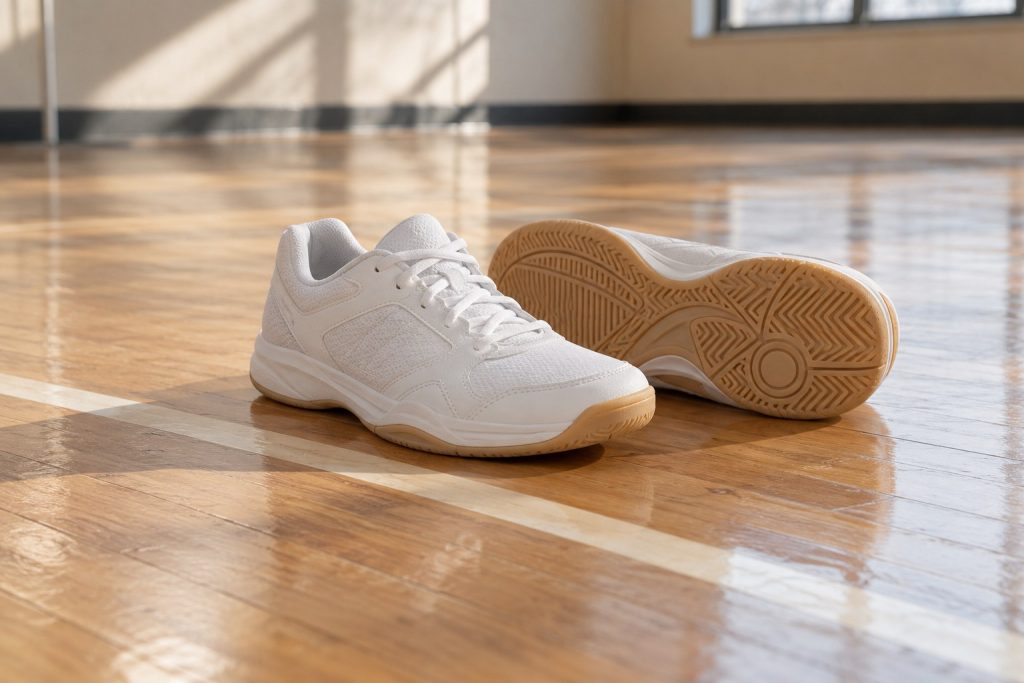
Read the actual specification
Look for an explicit non-marking description from the manufacturer. Decathlon describes this feature as protecting indoor sports floors from marks. Sole color or a casual indoor appearance is not enough information to establish whether a particular model meets the venue’s rules.
Choose for the movements
A shoe for court play and a shoe for straight-line running can have different designs. Fit, support and suitability for the surface matter alongside the non-marking label. Ask the venue or coach which footwear is appropriate for the activity you booked.
Keep the sole clean
Bring court shoes separately if the venue requires indoor-only footwear. Check the outsole for dirt or small stones before entering. A non-marking material does not mean that grit carried in from outside cannot damage or dirty the floor.
Check condition before playing
Inspect the sole and upper for wear and test the fit before a full session. Stop if the floor or shoes feel unexpectedly slippery and ask staff to check conditions. Non-marking is one useful feature, not a substitute for a safe surface and suitable shoes.
Sources
Related reading
Running Shoes vs. Training Shoes: Which Pair Fits Your Workout?
How to Clean and Dry Running Shoes
Related reading
Feather or Nylon Badminton Shuttles: Ask About the Session
Related reading
Squash Ball Dots: Why Beginners May Need More Bounce
Related reading
About this article: an introductory editorial draft. Not yet independently reviewed by a fitness professional.