Barbell Collars: Fit, Fastening, and Weight to Check
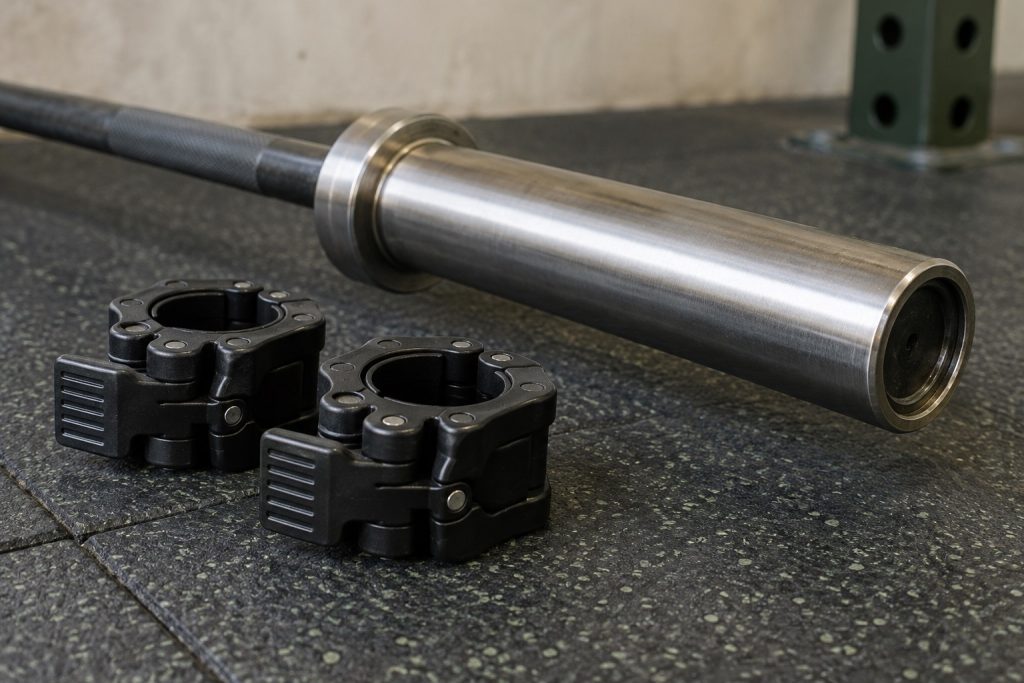
Barbell collars fasten outside the plates to help keep them in position on the sleeves. Use collars compatible with the bar and follow their fastening instructions. A collar that looks closed but can slide freely is not a secure fit.
Are all collars the same size?
No. Collar dimensions must match the sleeve diameter and intended equipment. For example, Eleiko’s collar range includes spring collars specified for 50-millimeter sleeves as well as other designs. That is a product specification, not a statement that every bar takes the same collar.
Measure or check the bar’s documentation when uncertain. The diameter where plates slide on matters; the central section you grip is a different part of the bar. Do not force a mismatched collar into place.
What should you check before lifting?
Load the bar symmetrically according to the exercise setup, position compatible collars outside the plates, and fasten them as the manufacturer directs. Check both sides. If a clamp, spring, or locking part is damaged, ask staff for a replacement.
Inspect the setup after changing plates rather than assuming a collar remained properly secured. An instructor can demonstrate the mechanism before your first loaded session.
Should collar weight count toward the total?
Include it when accurate total load matters, using the actual specification. Some collars contribute little weight, while heavier competition designs can make a meaningful difference. Do not assume a collar’s mass from its appearance.
In an illustrative example, a 20-kilogram bar, two 10-kilogram plates, and two collars weighing 0.2 kilograms each total 40.4 kilograms. The equation is bar plus all plates plus both collars. These are example masses, not specifications for every product.
Our barbell-weight guide and plate calculator help with the rest of the load. Check whether any calculator includes collar mass before interpreting its result.
Do collars replace other safety equipment?
No. They help retain plates; they do not catch a failed lift or replace correctly adjusted rack safeties and an appropriate spotting plan. Learn the whole setup for the exercise rather than treating one accessory as complete protection.
What makes a useful habit?
After each plate change, check load symmetry, fastening, and the surrounding space before the next set. For first-time gym visits, use the broader equipment orientation checklist and ask staff when a component is unfamiliar.
Related reading
About this article: an introductory editorial draft. Not yet independently reviewed by a fitness professional.