Broth vs Stock: Read the Carton Before Choosing
Broth and stock are flavorful cooking liquids, but the names do not guarantee a particular sodium content, protein amount or thickness. Traditional stock often emphasizes bones and a longer simmer. For packaged products, the ingredient list and preparation directions are more useful than the name alone.
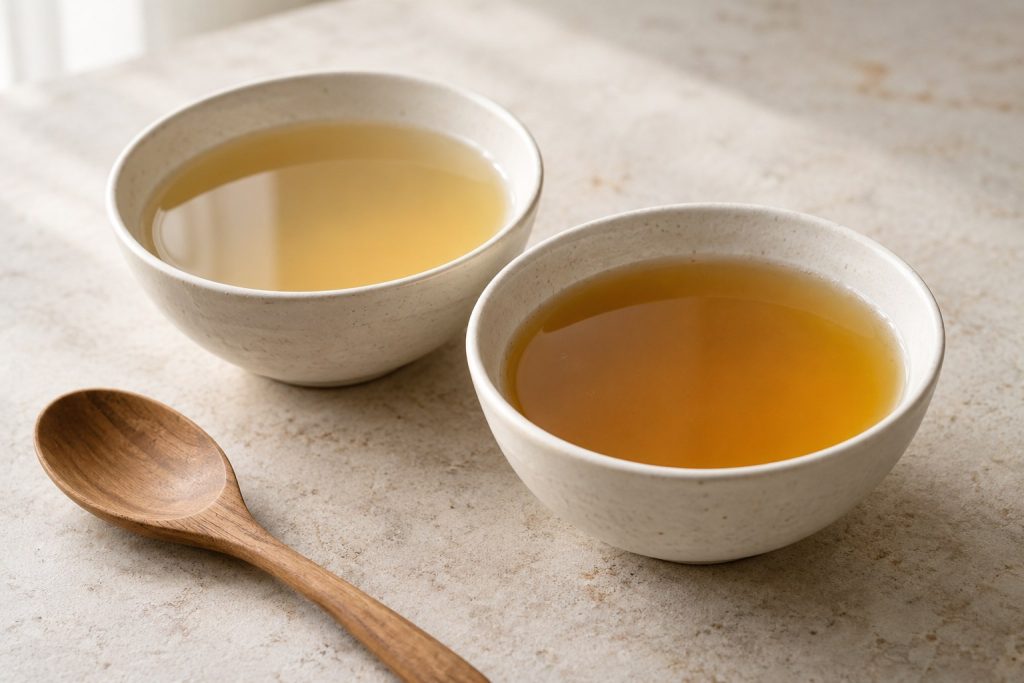
Start with the intended dish
A soup, sauce and pot of rice may need different flavor strength. Swanson describes broth for general cooking and stock for a fuller-bodied base. Treat that as a description of its products, not a universal rule that one label is always superior.
Check whether it is concentrated
A ready-to-use carton and a concentrated paste are not measured the same way. Follow dilution directions before comparing flavor or nutrition. If a recipe calls for prepared broth, adding the same volume of concentrate can change the dish substantially.
Compare equal prepared portions
Read sodium and other nutrition values for the same amount of prepared liquid. Also check ingredients for the dietary requirements of the meal. Vegetable stock and meat stock are different products; the word stock does not identify all ingredients.
Store the opened product correctly
An unopened shelf-stable carton can need refrigeration after opening. Follow its label for storage and use time, and mark the opening date if helpful. Neither a rich taste nor the phrase bone broth establishes special health benefits or makes storage instructions optional.
Sources
Related reading
About this article: an introductory editorial draft. Not yet independently reviewed by a fitness professional.