Why Does Body Weight Change from Day to Day?
Daily body-weight changes are not automatically changes in body fat. A scale also reflects water, food and drink still in your body, and differences in measurement conditions. If weighing is useful to you, compare consistent measurements over time rather than judging a workout or meal from one reading.
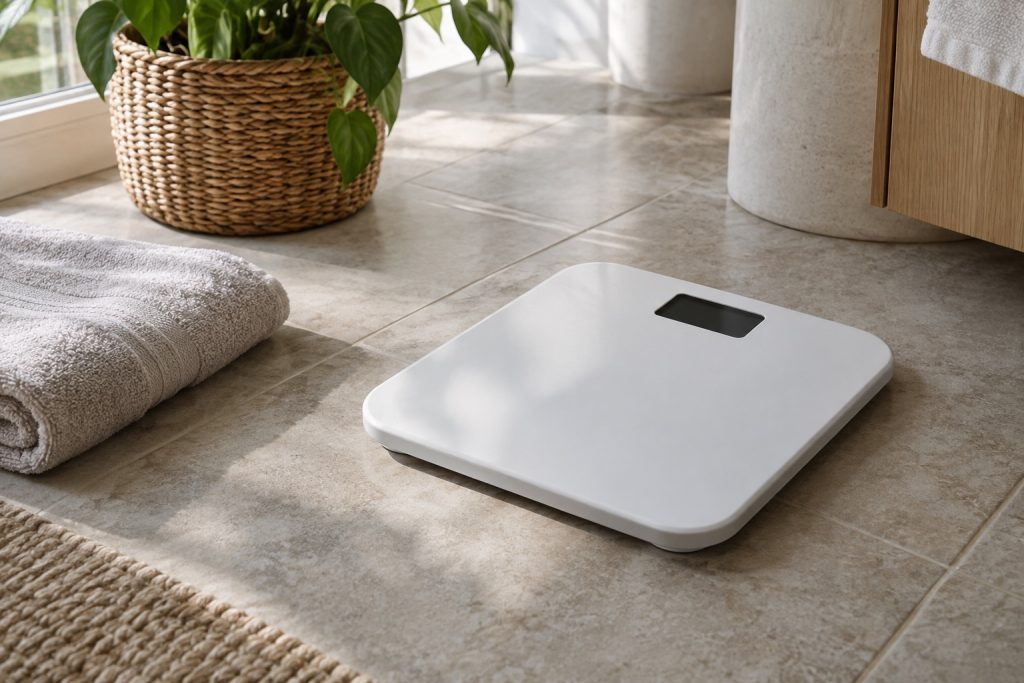
What can change the number overnight?
Cleveland Clinic describes fluid retention, digestion, hormonal changes, and medications among reasons weight can fluctuate. A scale measures total mass; it cannot identify which factor explains a particular change.
| Possible influence | What a single reading cannot tell you |
|---|---|
| Recent food and drink | How much of the change is still material being digested or processed. |
| Changes in fluid balance | Whether the difference represents a lasting tissue change. |
| Hormonal or medication effects | The exact cause without further context. |
| Different weighing conditions | Whether the measurement is comparable with yesterday’s. |
How can you make readings more comparable?
Use the same scale on a firm, level surface, under similar conditions and at a similar time. Cleveland Clinic’s weighing guidance emphasizes consistency. A morning measurement and an evening measurement after meals are not equivalent observations.
Write down the conditions once so you have a repeatable routine. You do not need to keep stepping on and off to find a preferred number. Check the scale’s instructions if readings vary because of placement or setup.
What does looking at a trend mean?
It means comparing a series rather than treating the latest value as the whole story. For a simple mathematical example, readings of 150, 152, and 151 pounds have an average of 151 pounds. The final reading alone does not reveal how those values varied.
If you choose to compare weekly averages, use similar sampling conditions and remember that a short average still cannot distinguish water from fat or muscle. This is a way to summarize measurements, not a diagnosis or an instruction to weigh daily.
Should you change your workout after one higher reading?
A single measurement is a weak reason to overhaul a routine. Review what you are trying to measure and whether weight is relevant to that goal. Strength, endurance, and consistency can improve without the scale providing a clear daily signal. Our progress measures beyond body weight offer alternatives.
When does a change deserve medical attention?
Discuss a large, persistent, or unexplained change with a healthcare professional, especially if it accompanies new symptoms. Do not assume every sudden change is harmless fluid retention. If weighing causes distress or drives restrictive eating or compensatory exercise, step back from the tracking and seek support.
For ordinary training records, pair useful measurements with clear fitness goals. Read sweating and fat loss before interpreting a lower post-workout reading as proof of fat loss.
About this article: an introductory editorial draft. Not yet independently reviewed by a fitness professional.