Rye Bread vs Pumpernickel: Read the Ingredients, Not the Color
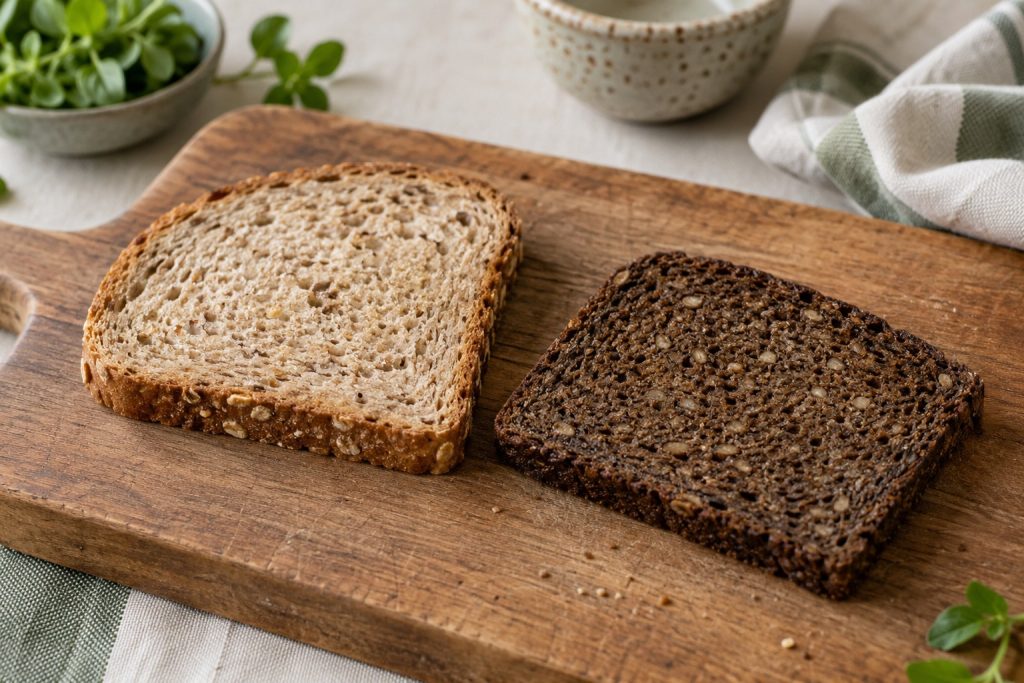
Rye bread is a broad category; pumpernickel is a style associated with rye, with recipes that vary by country and producer. A dark loaf is not automatically all whole grain. The ingredient list is more informative than color alone.
Look at the grain ingredients
Some rye breads blend wheat and rye flours. King Arthur Baking explains that rye flour ranges from lighter refined forms to whole-rye pumpernickel flour. A bread name does not reveal the exact proportions or whether every flour is whole grain.
Expect different styles
Dense whole-rye pumpernickel and softer sandwich loaves sold under a similar name can feel very different. Mestemacher’s pumpernickel is an example with whole rye meal. Check the actual product instead of treating a regional style as a universal recipe.
Compare equal weights
Slices can differ substantially in size and density. Compare fiber, sodium and other nutrients at the same weight, then calculate for the slices you eat. A small dense slice and a large airy slice need not represent the same portion.
Plan the meal and storage
Choose a texture that works for your toppings and follow the package’s storage advice. Rye contains gluten, and blends may also contain wheat or other allergens. Dark color, sourdough fermentation or a traditional name does not make ordinary rye bread gluten-free.
Sources
King Arthur Baking; Mestemacher; FDA.
Related reading
About this article: an introductory editorial draft. Not yet independently reviewed by a fitness professional.