What Are Drop Sets, and When Are They Useful?
A drop set extends an exercise by reducing the weight and continuing with little rest after a demanding set. It can fit more work into a short period, but it is optional. Drop sets have not been established as consistently better for muscle growth than conventional sets.
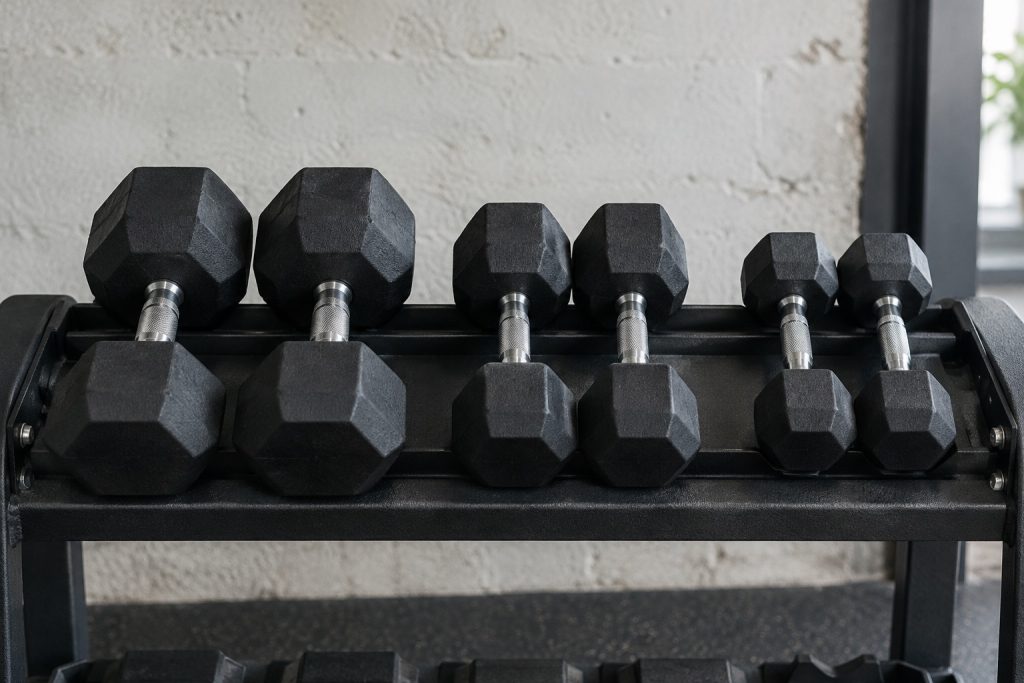
What does a drop set look like?
Here is an illustration of the sequence, not a prescribed load or repetition target: perform a set of dumbbell curls with a manageable pair, put them down safely, switch to a lighter pair, and continue the same exercise. The change in weight is what makes this a drop set.
Research protocols differ in how close participants get to failure, how much weight they remove, and how many reductions they make. There is no single universal drop-set recipe. In particular, reducing the load does not remove the fatigue accumulated in the first part.
Do drop sets build more muscle?
A 2023 systematic review and meta-analysis included six studies and 142 participants. It found no statistically significant difference in hypertrophy between drop sets and traditional sets. Some included protocols took less time, which makes efficiency a reasonable reason to consider them.
The studies were relatively small and short. Similar average results do not mean every version of a drop set is interchangeable with any conventional workout. The finding also does not prove that doing extra drops on top of your existing plan will improve results.
How are drop sets different from supersets?
| Method | What changes? |
|---|---|
| Conventional sets | Rest between separate sets of an exercise. |
| Drop set | Reduce the load and continue the same exercise with little rest. |
| Superset | Pair two exercises with little rest between them. |
See our superset guide for pairing examples. Neither method requires claiming several stations in a busy gym. Equipment availability is part of whether the plan is practical.
When might a drop set be useful?
Consider it when you already know the exercise, can change the load safely, and have a specific time constraint. A simple exercise with an easy load adjustment is usually easier to organize than unloading a complicated setup while fatigued. If you cannot finish and stop safely, choose ordinary sets instead.
Beginners can make a straightforward plan easier to track by keeping normal rest periods. You do not need advanced set techniques before learning consistent movement and effort.
How should you log a drop set?
Record each load and its repetitions in sequence, rather than reporting only the first weight or adding all repetitions without context. Note the number of drops and approximate effort. Compare that sequence with itself over time; it is a different task from a fully rested set.
About this article: an introductory editorial draft. Not yet independently reviewed by a fitness professional.