Eccentric vs. Concentric: What Happens During a Rep?
A concentric muscle action produces force while the muscle shortens; an eccentric action produces force while it lengthens. In a controlled dumbbell curl, the elbow flexors act concentrically as you lift and eccentrically as you lower. Holding the weight still adds an isometric action.
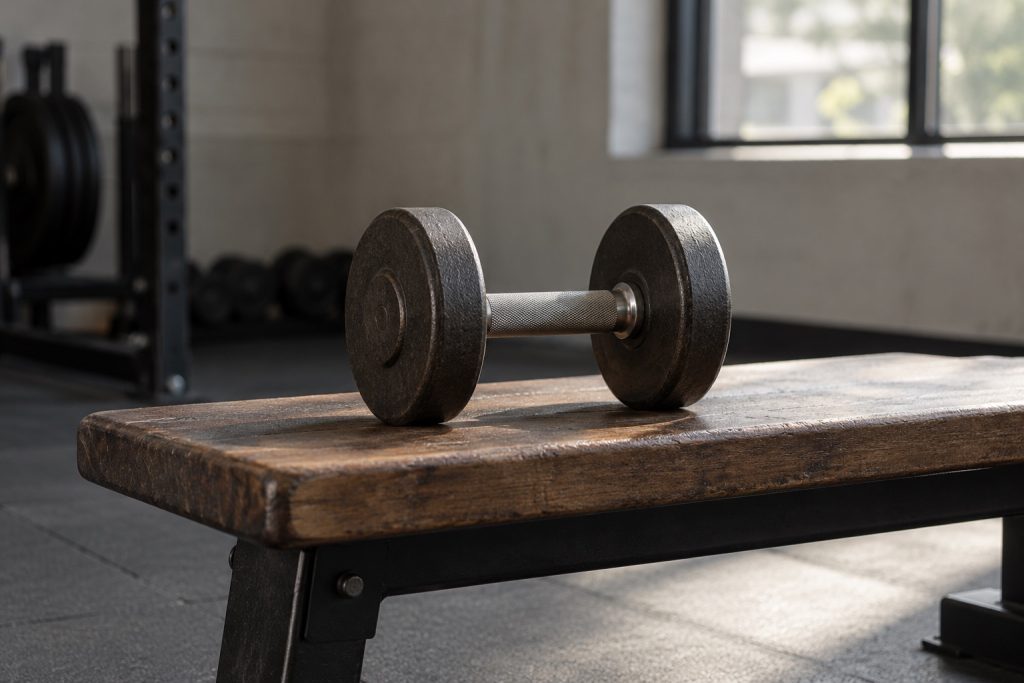
What does each phase look like in a curl?
The American College of Sports Medicine describes concentric and eccentric actions as shortening and lengthening actions. Both commonly occur within the same exercise repetition.
| Part of a controlled curl | Elbow-flexor action | What to observe |
|---|---|---|
| Raise the dumbbell toward the shoulder | Concentric | The elbow bends while the weight rises. |
| Lower the dumbbell under control | Eccentric | The elbow straightens while the muscles resist the load. |
| Pause without moving | Approximately isometric | The joint angle stays roughly constant. |
This example describes the elbow flexors, not every muscle in the body. Other muscles help maintain your position. Simply labeling every upward movement concentric and every downward movement eccentric can be misleading across different exercises.
Does eccentric mean relaxing?
No. Lowering a load under control still requires muscular effort. Letting a dumbbell fall is different from guiding its descent. Think of the lowering phase as part of the repetition, with a clear finish, rather than a gap before the next lift.
Choose a load that lets you control both directions without swinging to complete the lift. If the exercise is unfamiliar, learning the movement with a manageable weight is more useful than making the lowering phase deliberately exhausting.
Should you lower every weight very slowly?
These definitions do not prescribe an ideal speed. A training plan may specify a particular rep tempo, but knowing the word eccentric is not a reason to turn every repetition into a long negative. Follow the purpose of the exercise and keep technique consistent when comparing sessions.
Why can unfamiliar lowering work cause soreness?
The ACSM article notes that high-intensity or high-volume eccentric work can cause delayed soreness and temporary reductions in muscle function, especially when unfamiliar. That is a reason to introduce new work gradually, not to chase soreness as proof of success.
For example, adding slow lowering to every set changes the session even if the weight stays the same. Record the change and account for it when planning the next workout. Our guide to muscle soreness after exercise explains the distinction between soreness and progress.
What are negative reps?
The phrase usually means emphasizing the eccentric phase, sometimes with assistance for the return. That can introduce a different loading demand. It is optional, and beginners do not need assisted heavy negatives to understand normal repetitions. Compare isometric exercises if you want to understand the holding action separately.
About this article: an introductory editorial draft. Not yet independently reviewed by a fitness professional.