Dates vs Raisins: Portions, Texture, and Kitchen Uses
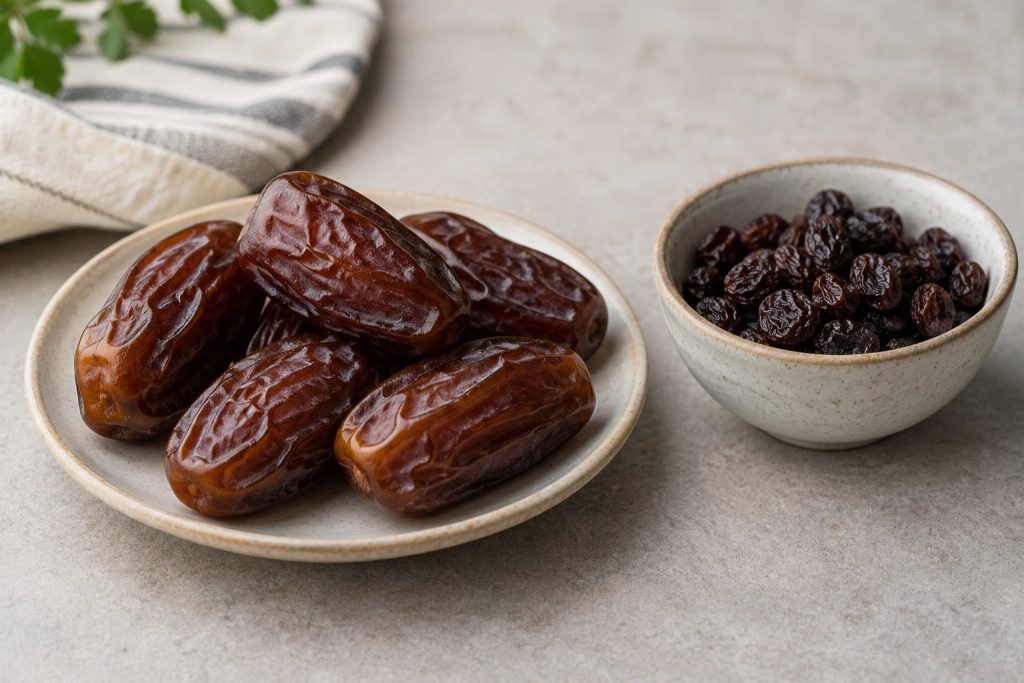
Dates and raisins are sweet fruit ingredients, but a handful or a piece is not a consistent comparison. Dates vary greatly in size, while raisins are small dried grapes. Compare the portion you actually plan to eat.
Check the form you are buying
Dates may be whole, pitted, chopped or made into paste. Raisins may be loose, coated or included in a snack mix. Read the ingredients for added sweeteners, oil or coatings. Naturally occurring fruit sugars still contribute to total sugars even without added sugar.
Use weight for a clearer comparison
A large date and a small date are not equivalent portions, and the spaces between fruit affect a cup measurement. Use the label’s serving weight when comparing products. Dried fruit is compact, so measuring a portion can be more informative than estimating a handful.
Match texture to the recipe
Soft dates can blend into a paste; raisins add smaller chewy pieces to oats, bread or salads. Check dates for pits before chopping or blending, including products labeled pitted. Replacing raisins with date paste can change moisture and structure, not just sweetness.
Keep the whole meal in view
USDA food-group guidance includes dried fruit within the fruit group. That does not make every fruit-based bar or coated snack nutritionally equivalent. Consider the amount used and the rest of the meal. Neither dates nor raisins should be presented as a treatment or a guaranteed exercise-performance booster.
Sources
Related reading
Fresh vs. Dried Fruit: Portions, Sugar, and Practical Uses
Total Sugars vs Added Sugars: Reading a US Nutrition Label
Related reading
Golden vs Dark Raisins: Color Can Come from Processing
Related reading
About this article: an introductory editorial draft. Not yet independently reviewed by a fitness professional.