Muesli vs Granola: Ingredients, Crunch, and Breakfast Portions
Muesli commonly contains loose grains, nuts, and dried fruit, while granola is typically baked into a crunchy mixture, often with oil and sweeteners. Recipes vary. Neither name alone establishes the sugar, fiber, or energy in the breakfast you actually eat.
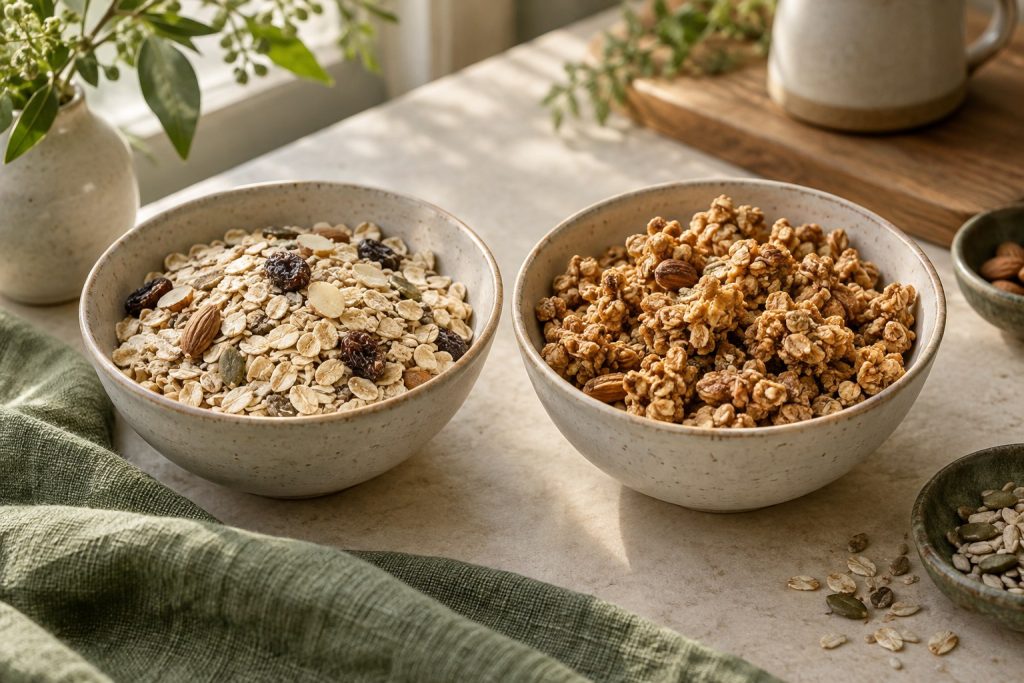
Check what holds the mixture together
Read the ingredients for grains, nuts, dried fruit, oils, and sweeteners. A cluster texture often reflects a different recipe from loose flakes. Do not assume every muesli has no added sugar or every granola has the same amount. Compare the actual packages and note ingredients relevant to allergies.
Use weight as well as volume
Loose flakes and dense clusters can weigh differently in the same bowl or scoop. Compare equivalent weights for a product comparison, then consider your usual portion. A serving listed on the pack is not automatically the amount you pour. A kitchen scale can clarify this once without requiring constant weighing.
Match preparation to the product
Granola is commonly ready to eat, while muesli can be served, soaked, or cooked according to its instructions. Soaking changes texture, not the identity of the ingredients. Keep mixtures with perishable liquids refrigerated as appropriate. Follow the package or recipe rather than assuming every cereal uses the same method.
Include the rest of breakfast
Milk, yogurt, fruit, and extra toppings also contribute to the meal. Compare the whole bowl, not just the dry cereal. Choose a texture you enjoy and a combination that fits your needs. Store the dry mix as directed and keep moisture out so the remaining portion stays usable.
Sources
Related reading
About this article: an introductory editorial draft. Not yet independently reviewed by a fitness professional.