Kettlebell Handle Size: What to Check Before Buying
A kettlebell’s weight does not tell you whether its handle will fit your hands comfortably. Handle thickness, opening width, and surface finish vary between models. Check these alongside the load instead of buying only by the number printed on the bell.
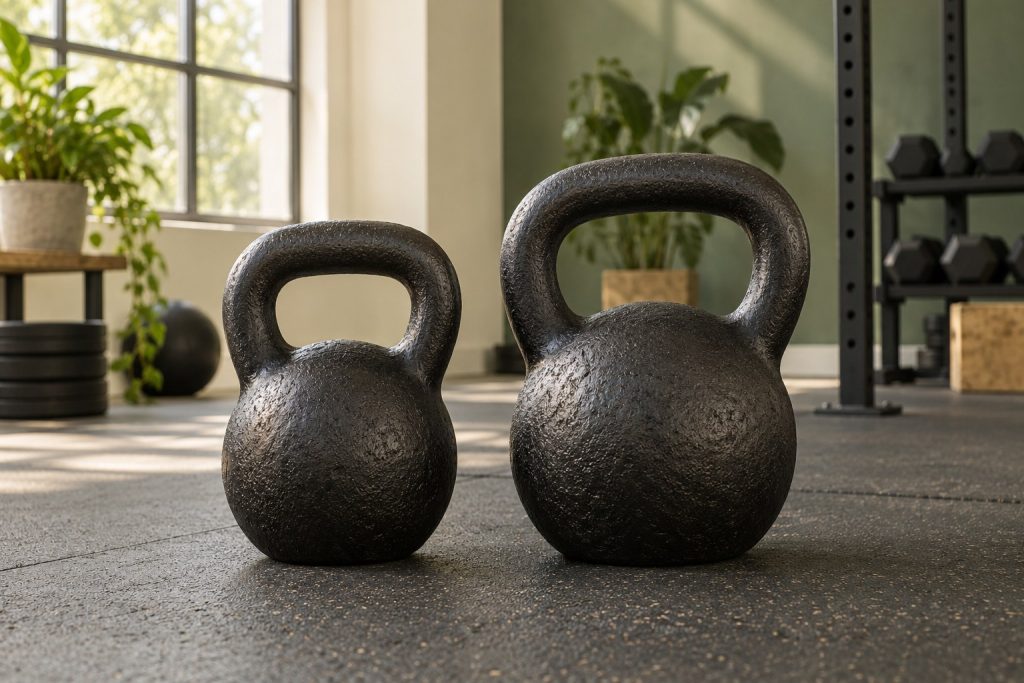
Thickness and opening are different measurements
Handle diameter describes the part you wrap your fingers around. The opening describes the space inside the handle. A thick grip can still have a wide opening, and a thin grip can have limited room. Ask for both dimensions if an online listing shows only weight.
Think about the intended exercise
A movement held with both hands needs enough room for that grip. Other positions may place the bell differently against the hand or forearm. Try a suitable sample under guidance rather than judging from a photograph. A comfortable static hold does not prove that every moving exercise will feel right.
Inspect the surface and construction
Look for an even, intact finish and avoid sharp seams, loose parts, or obvious damage. Rougher is not automatically better: an abrasive surface can make handling unpleasant. Follow the maker’s care guidance instead of modifying the handle on your own. Changing its coating can change the grip.
Choose load and grip together
Do not buy an unsuitable weight simply because its handle feels good. Start with a load appropriate to the exercise and your experience, with instruction where needed. Record the model if you find a useful fit. Another bell with the same weight may have a different shape.
Sources
Related reading
Dumbbells vs. Kettlebells: Which Should a Beginner Choose?
How to Choose Your First Dumbbell Weight
Related reading
Why Are Competition Kettlebells the Same Size at Different Weights?
About this article: an introductory editorial draft. Not yet independently reviewed by a fitness professional.