Canned Fruit in Juice vs Syrup: How to Compare the Label
Canned fruit in juice and fruit in syrup can contain different amounts of sugar because the packing liquid differs. Juice is not sugar-free, and draining syrup does not make fruit sugar-free. Compare the same fruit and the label’s serving description before drawing conclusions.
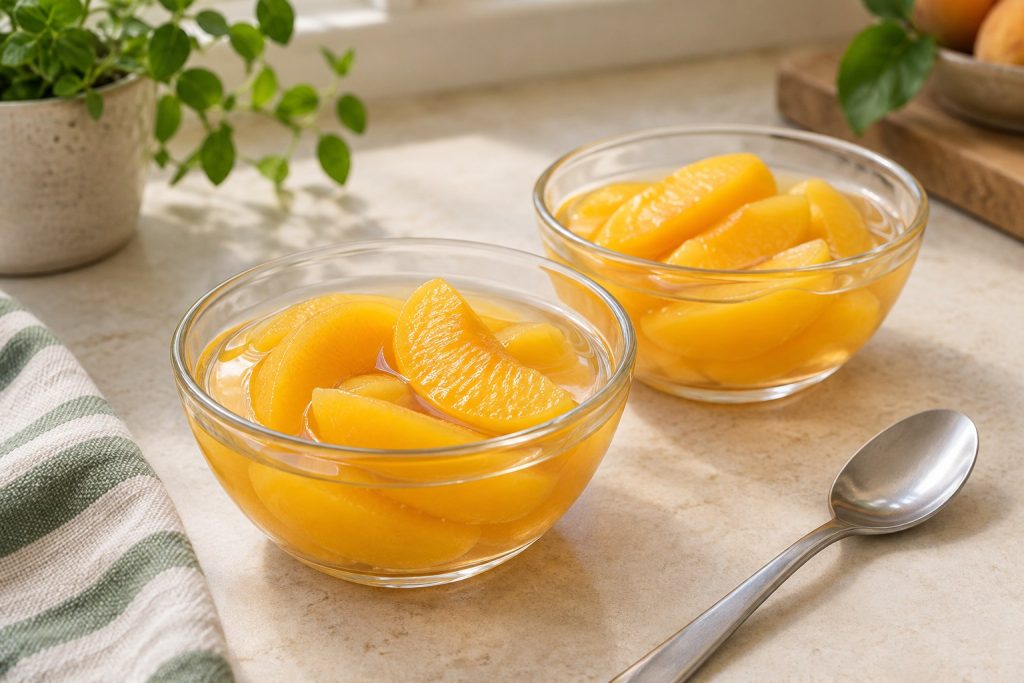
What is the fruit packed in?
Read the ingredients for juice, water, sugar, or other sweeteners. Light and heavy syrup are different products, while juice-packed fruit may use juice from concentrate. The front label is a starting point, not the full comparison. Check the actual product instead of assuming all cans from a brand match.
Does the serving include the liquid?
Look for wording that specifies the serving as packed or drained. Compare products on the same basis and check the amount you actually eat. A value for fruit plus liquid should not be treated as an exact value for drained fruit. Ask the manufacturer if the label’s basis is unclear.
What does draining change?
Draining removes some packing liquid, but the remaining sugar cannot be calculated accurately by guessing how much sweetness washed away. The fruit still has naturally occurring sugars. Use labeled drained values when available. If you add the liquid to a smoothie or sauce, it remains part of the finished recipe.
Which option is practical for you?
Choose the texture, flavor, and sugar information that fit your meal. Fruit can be added to yogurt or served alongside breakfast without requiring a special fitness product. After opening, follow the package’s storage directions. Pick a pack size you can finish so convenience does not lead to forgotten leftovers.
Sources
Del Monte: fruit in juice; FDA: added sugars.
Related reading
Fresh vs. Dried Fruit: Portions, Sugar, and Practical Uses
Whole Fruit vs Fruit Juice: What Changes?
Related reading
Will a Pineapple Ripen on the Counter? Do Not Expect More Sweetness
About this article: an introductory editorial draft. Not yet independently reviewed by a fitness professional.