Raw vs Roasted Nuts: What to Check Beyond the Name
Raw and roasted nuts can both be useful foods. The nut type, added ingredients, and portion often matter more to your comparison than the word roasted alone. Distinguish plain nuts from salted, sweetened, or coated products before deciding which package suits your needs.
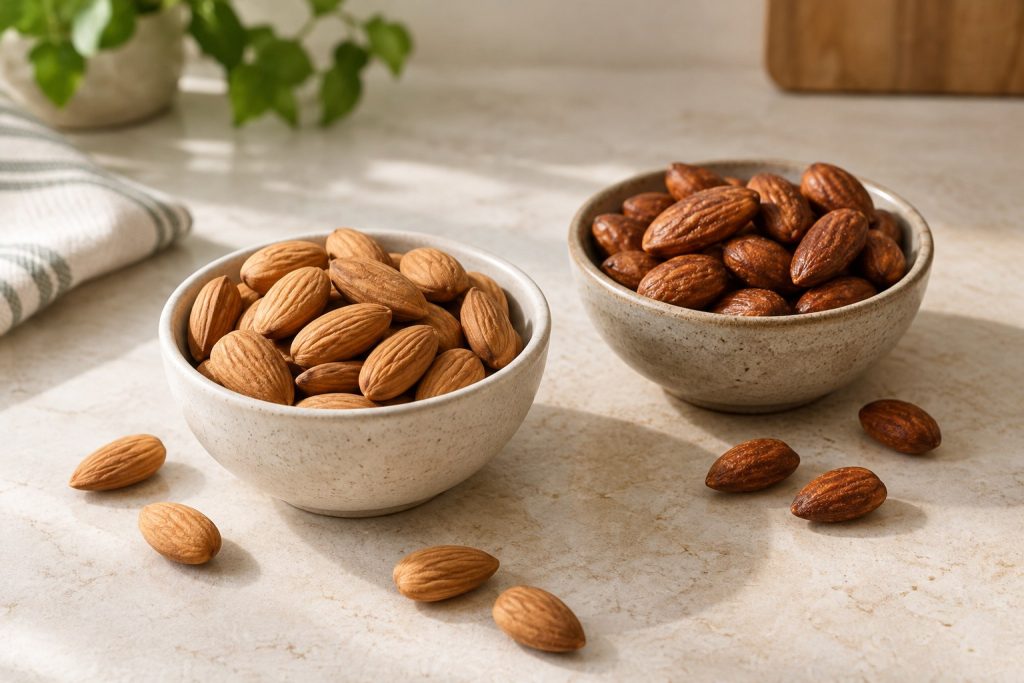
What do dry-roasted and oil-roasted mean?
Dry-roasting uses heat without added roasting oil; oil-roasting uses oil. Check the ingredient list because a dry-roasted product can still have salt, seasonings, or other additions. Raw also does not necessarily mean untouched by all processing. For example, product handling can include treatments separate from roasting. Use the maker’s description for the actual product.
Does roasting remove all the nutritional value?
No. Harvard’s Nutrition Source describes raw and dry-roasted almonds as nutritionally comparable. That does not make every nut or flavored product identical. Avoid extending one comparison to honey coatings, chocolate, or a mixed snack. Look at the actual nutrient panel and ingredients rather than assuming raw is always superior or roasted is always unsuitable.
How should you compare portions?
Use the same weight and the same nut type where possible. A handful varies with hand size and with whole versus chopped nuts. Compare salt or sodium, added sugars where listed, and the amount you plan to eat. Portioning some into a bowl can make the package information easier to relate to your snack.
What about taste and storage?
Choose a flavor and texture you enjoy without overlooking allergy requirements. Store the product as directed in a closed container away from conditions that speed deterioration. Buy an amount you can use while fresh. If nuts develop a rancid smell or signs of spoilage, replace them rather than relying on roasting or seasoning to fix the problem.
Sources
Harvard T.H. Chan School of Public Health; Almond Board of California.
Related reading
Trail Mix vs. Plain Nuts: Compare Ingredients and Portions
Peanut Butter vs. Powdered Peanut Butter: How to Compare
Related reading
About this article: an introductory editorial draft. Not yet independently reviewed by a fitness professional.