How to Clean Swim Goggles Without Damaging the Coating
For many swim goggles, gentle rinsing and air-drying are better than scrubbing. The inside lens may have an anti-fog coating that rubbing can damage. Start with the instructions for your exact goggles because coatings and approved cleaning methods differ.
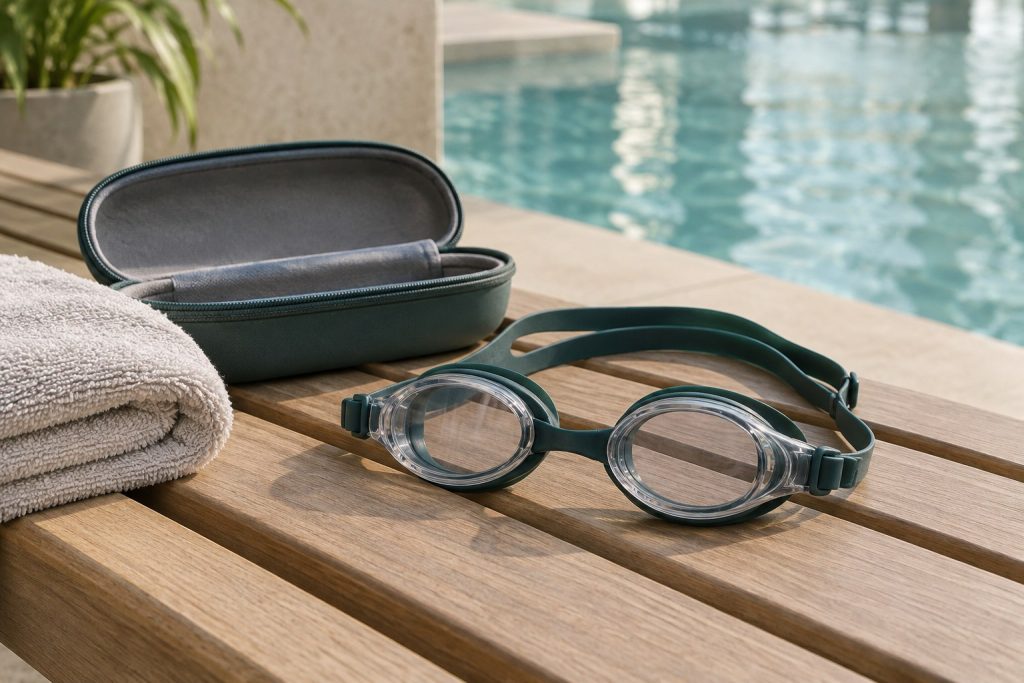
What should you do after swimming?
Rinse as directed with clean water, then let the goggles air-dry in a protected place. Speedo recommends lukewarm water for the goggles covered by its care guide. Avoid putting damp goggles straight into a closed training bag. Make rinsing part of unpacking so the pair is ready for the next session.
Can you wipe the inside of the lenses?
Do not assume a towel, finger, or lens cloth is suitable for the inner surface. Some coatings are easily damaged by contact. Follow the manufacturer’s guidance for both lens surfaces and avoid abrasive cleaning. A method that works on ordinary spectacles is not automatically appropriate for coated swimming goggles.
What if the goggles keep fogging?
Check fit and the care instructions before adding a product. Fogging and water leaking through the seal are different problems. Use an anti-fog treatment only if it is approved for that lens and apply it exactly as directed, including any rinsing requirement. Do not improvise with household cleaners or promise that a worn coating can always be restored.
How should you store and check them?
Once dry, use a protective case or pouch and keep the lenses away from keys and hard edges. Inspect the strap, seal, and lens clarity before a swim. Replace damaged parts only with compatible replacements. If the lens is badly scratched or visibility remains poor, replace the goggles instead of trying to polish away the problem.
Sources
Related reading
How to Choose Swim Goggles That Fit Comfortably
Lap-Swimming Etiquette: How to Share a Pool Lane
Related reading
Clear vs Mirrored Swim Goggles: Choose for the Light
Related reading
About this article: an introductory editorial draft. Not yet independently reviewed by a fitness professional.