Treadmill Belt Size: What the Dimensions Actually Mean
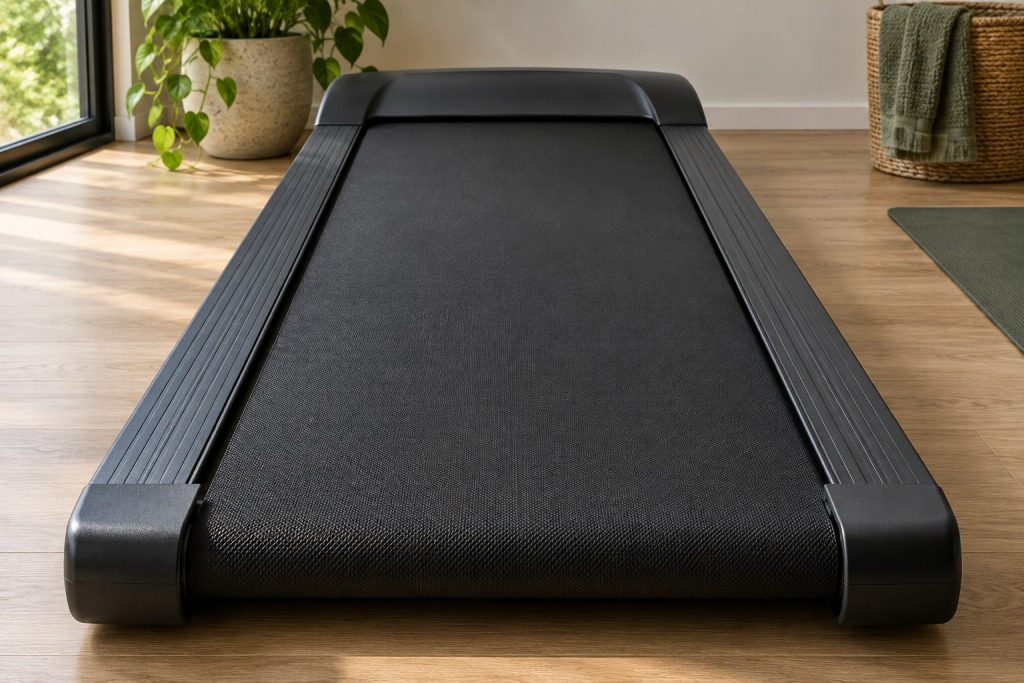
Treadmill belt size describes the space available for your steps, not the floor space occupied by the whole machine. Before comparing models, separate running area, assembled dimensions, folded dimensions, and required clearance. A compact footprint alone does not tell you whether the treadmill will feel comfortable to use.
Which measurements should you compare?
Look for the usable running surface in the manufacturer’s specifications. Check which figure is width and which is length, and keep the units consistent. Overall dimensions include the frame and other parts. Horizon, for example, lists the running area separately from assembled and folded measurements; do not substitute one measurement for another.
Does a longer belt automatically fit you better?
Length gives room in the direction of travel, while width affects side-to-side space. Your stride, intended speed, and comfort all matter. A height-only chart cannot guarantee a suitable fit. If possible, try the exact model at an appropriate pace with staff assistance, rather than changing your stride just to stay on the belt.
How much room do you need at home?
Mark the assembled footprint on the floor, then add the clearances required by the manual. Include room to get on and off and check overhead space at the intended incline. Folding dimensions describe storage, not permission to exercise close to a wall. Also check the delivery route, doorways, and the machine’s moving instructions.
What belongs on your comparison sheet?
Record running area, assembled size, clearances, permitted use, user-weight limit, and storage method. Note whether every intended user tried the machine. Keep the model number with the measurements: similar names can describe different versions. Do not choose a smaller model on the assumption that a wider replacement belt can be fitted later.
Sources
Related reading
Walking Pad vs. Treadmill: Choose for the Way You Will Walk
How to Use a Treadmill Safety Clip
Related reading
Treadmill Belt Care: Cleaning Is Not the Same as Lubrication
Related reading
About this article: an introductory editorial draft. Not yet independently reviewed by a fitness professional.